
Abilify
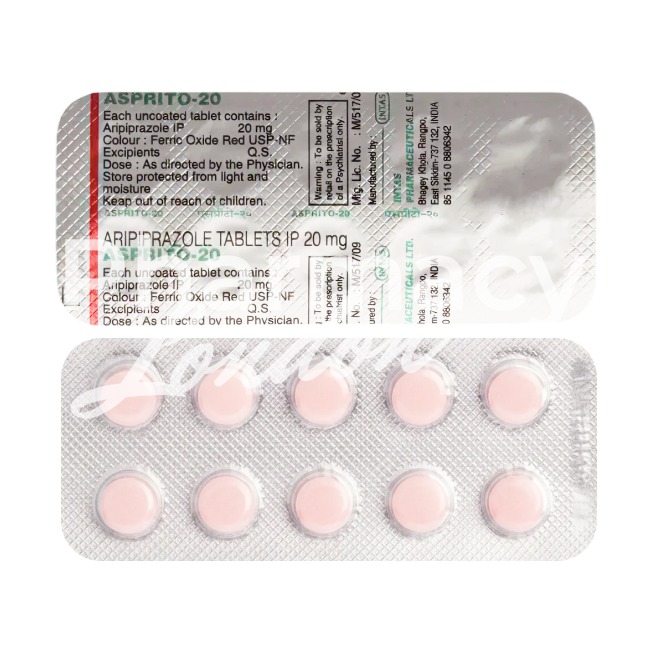
In brief
- Aripiprazole (Abilify) is a prescription-only medicine (POM) in the UK and should be used under medical supervision.
- Abilify is used for schizophrenia and bipolar I disorder (manic episodes), and off-label in some other conditions such as tic disorders; it acts as a dopamine D2 partial agonist and serotonin 5‑HT1A partial agonist with 5‑HT2A antagonism, helping to stabilise dopaminergic and serotonergic signalling.
- Usual adult doses vary by indication: schizophrenia typically 10–15 mg once daily (range 10–30 mg/day), bipolar mania 15 mg/day, off-label adjunct in major depressive disorder 2–5 mg/day; paediatric doses are lower and titrated by age/weight.
- Administered orally as tablets (5, 10, 15, 30 mg), orally disintegrating tablets (10, 15 mg), or oral solution (1 mg/mL); long‑acting intramuscular injectables are available (Abilify Maintena 300/400 mg monthly; Abilify Asimtufii 720 mg every 2 months).
- Some patients may notice reduced agitation within a few days, but meaningful antipsychotic effects often begin within 1–2 weeks; full therapeutic benefit can take several weeks (commonly up to 4–6 weeks).
- The drug is taken once daily for oral dosing with per‑dose coverage of 24 hours; aripiprazole has a long elimination half‑life (~75 hours) so effects persist and steady state is reached over about two weeks; injectables provide monthly or bimonthly coverage.
- Avoid alcohol while taking Abilify as alcohol can increase drowsiness, impair concentration and co‑exist with heightened side‑effects (including sedation and dizziness).
- The most common side effect is akathisia (restlessness); other frequent effects include insomnia, headache, nausea, constipation, dizziness, mild sedation, tremor and transient weight gain.
- Would you like to try Abilify without a prescription?
Basic Abilify information
- INN (international nonproprietary name): Aripiprazole
- Brand names available in the United Kingdom: Abilify; Abilify Maintena (monthly depot); Abilify Asimtufii (bimonthly injection); generic aripiprazole products from manufacturers such as Sandoz, Teva, Mylan and Zentiva.
- ATC code: N05AX12
- Forms and strengths: tablets 5 mg, 10 mg, 15 mg, 30 mg; orodispersible tablets (ODT) 10 mg and 15 mg; oral solution 1 mg/mL; injectable (LAI/depot) — Abilify Maintena 300 mg or 400 mg monthly and Abilify Asimtufii 720 mg every two months.
- Manufacturers in the United Kingdom: Original developer Otsuka Pharmaceutical; Abilify Maintena co‑marketed by Lundbeck; multiple generic suppliers including Sandoz, Teva, Mylan and Zentiva supply aripiprazole products in the UK.
- Registration status in the United Kingdom: licensed as a prescription‑only medicine.
- OTC / Rx classification: Prescription‑only (Rx).
Legal status and availability in the UK
In our online pharmacy, Abilify is available without a prescription, with discreet delivery to the United Kingdom in 9–21 days.
Clinical effectiveness in the UK
Will people using Abilify on the NHS notice real benefit?
Aripiprazole commonly improves positive psychotic symptoms when used for schizophrenia maintenance.
Patients and clinicians often prefer aripiprazole because it tends to give less parkinsonism and fewer extrapyramidal side effects than many first‑generation antipsychotics.
Patients frequently mention improved daytime alertness and reduced sedation compared with more sedating alternatives.
Akathisia and insomnia are recurrent patient concerns and often trigger dose review or adjunctive management.
- Patient‑reported improvements: better daytime alertness; fewer extrapyramidal symptoms; improved positive symptom control in schizophrenia.
- Frequent patient concerns: akathisia; insomnia; transient weight change.
| Outcome | Oral aripiprazole | LAI aripiprazole |
|---|---|---|
| Adherence | Dependent on daily pill taking; variable. | Adherence is easier to confirm with scheduled injections. |
| Side‑effect profile | Typical side effects: akathisia, insomnia. | Similar systemic side effects; administration site reactions possible. |
Indications and expanded uses
What is Abilify approved for, and when do clinicians use it off‑label?
In the UK, aripiprazole is licensed for schizophrenia in adults and adolescents aged 15 years and over, and for manic episodes in bipolar I disorder (including prevention of new manic episodes) in adults and, for up to 12 weeks, in adolescents aged 13 years and over.
Low‑dose aripiprazole (2–5 mg/day) is sometimes used off‑label as an adjunctive treatment in major depressive disorder in adults.
Specialist off‑label uses include Tourette’s syndrome and irritability associated with autism in selected children under specialist supervision.
Off‑label uses described in NHS secondary care include management of refractory agitation, some tic disorders and selective augmentation strategies where evidence supports an individual trial.
- UK‑licensed indications
- Schizophrenia (adults and adolescents aged 15 years and over); manic episodes in bipolar I disorder (adults, and adolescents aged 13 years and over).
- Off‑label governance checklist
-
- Document clinical rationale in the notes.
- Discuss evidence base and alternatives during consultation.
- Obtain informed consent with risk/benefit explanation.
- Arrange tailored monitoring and review intervals.
Composition and brand landscape
Which formulations and brands will I see in UK pharmacies?
The active ingredient is aripiprazole (INN) and the ATC classification is N05AX12.
Branded products are marketed as Abilify in tablet, ODT and oral solution presentations and as Abilify Maintena and Abilify Asimtufii for long‑acting injections.
Generic aripiprazole tablets and oral solution are widely available from suppliers such as Sandoz, Teva and Zentiva in the UK.
| Product name | Form | Typical setting |
|---|---|---|
| Abilify (tablets/ODT/oral solution) | Tablets 5–30 mg; ODT 10/15 mg; oral solution 1 mg/mL | Primary care / community pharmacy |
| Abilify Maintena | LAI 300 mg or 400 mg monthly | Hospital pharmacy / community mental health team |
| Abilify Asimtufii | LAI 720 mg every two months | Specialist clinic / hospital pharmacy |
| Generic aripiprazole | Tablets and oral solution under various trade names | Community pharmacies |
Packaging and trade names vary by supplier.
Contraindications and special precautions
Who should be careful with Abilify?
Absolute contraindication is a known hypersensitivity to aripiprazole or any excipient in the product.
Elderly patients with dementia‑related psychosis have an increased mortality risk and aripiprazole should be avoided for that indication.
Caution is required in people with a history of seizures, significant cardiovascular disease including QT prolongation risk, and in those with poorly controlled diabetes or marked metabolic syndrome.
Pregnancy and lactation require risk‑benefit discussion and use only when benefits justify the potential risks.
- Driving and daily‑life advice: avoid driving or operating machinery if drowsy, dizzy or experiencing new movement symptoms.
- Alcohol: avoid or moderate alcohol use because of additive CNS effects.
- Metabolic monitoring: baseline and periodic checks of weight, fasting glucose and lipids are advised.
| Special group | Guidance |
|---|---|
| Elderly with dementia | Avoid for dementia‑related psychosis due to increased mortality. |
| Pregnancy/Lactation | Use only if benefits outweigh risks; specialist obstetric/paediatric input where needed. |
| Seizure history | Use with caution and monitor for lowering of seizure threshold. |
Dosage guidelines
How is Abilify typically dosed on the NHS?
Standard adult dosing for schizophrenia is commonly 10–15 mg once daily, with an approved range up to 30 mg daily where clinically indicated.
Bipolar mania treatment commonly uses around 15 mg daily in adults.
When used off‑label as adjunctive treatment for major depressive disorder, low doses of 2–5 mg daily are typical.
Paediatric dosing is specialist‑led: adolescents usually start at 2 mg daily and are titrated to a target dose of 10 mg, and children treated off‑label for Tourette’s also start at very low doses.
| Indication / population | Typical starting dose |
|---|---|
| Adult schizophrenia | 10–15 mg/day (range 10–30 mg) |
| Bipolar I mania (adult) | ~15 mg/day |
| Adjunct in MDD (adult, off‑label) | 2–5 mg/day |
| Adolescents (schizophrenia ≥15 years; mania ≥13 years) | 2 mg/day, titrated to 10 mg/day |
| Tourette’s (children, off‑label) | Some regimens start at 2 mg with specialist titration up to 10–20 mg/day as required |
LAI schedules: Abilify Maintena is given as 300 mg or 400 mg intramuscularly once monthly and Abilify Asimtufii is given as 720 mg every two months in clinic settings.
Dose adjustments: start lower and titrate slowly in elderly patients and use clinical caution in severe hepatic impairment with appropriate monitoring.
Interactions overview
Which drugs and substances affect Abilify levels?
Aripiprazole is primarily metabolised by CYP3A4 and CYP2D6 enzymes.
Strong CYP3A4 or CYP2D6 inhibitors such as some SSRIs (for example fluoxetine or paroxetine) may increase aripiprazole plasma levels and could require dose adjustment or closer monitoring.
Strong CYP3A4 inducers such as carbamazepine can reduce aripiprazole concentrations and decrease effectiveness, and dose changes or alternative choices should be considered.
Concomitant treatment with other dopamine antagonists increases the risk of extrapyramidal symptoms.
| Interacting agent | Effect | Action |
|---|---|---|
| Fluoxetine / paroxetine (CYP2D6 inhibitors) | May raise aripiprazole levels | Consider dose reduction or monitoring |
| Carbamazepine (CYP inducer) | May lower aripiprazole levels | Consider dose increase or alternative therapy |
| Other antipsychotics | Increased extrapyramidal risk | Avoid unnecessary combinations; monitor closely |
| Alcohol | May enhance sedation/dizziness | Advise moderation or avoidance |
Serotonin syndrome has rarely been reported when aripiprazole is combined with serotonergic antidepressants, and akathisia may increase when it is combined with stimulants or certain antidepressants.
Comparable medicines and preferences
How does Abilify compare with other antipsychotics on the NHS?
Common NHS alternatives include quetiapine, risperidone, olanzapine and paliperidone.
Choice of antipsychotic is driven by the symptom target, side‑effect priorities, formulation needs and patient preference.
- Quetiapine: more sedating, often chosen when sleep or affective symptoms are prominent.
- Risperidone / paliperidone: stronger D2 blockade with higher risk of extrapyramidal symptoms and raised prolactin.
- Olanzapine: effective but associated with greater metabolic risk including weight gain and dyslipidaemia.
| Comparator | Key pros | Key cons |
|---|---|---|
| Quetiapine | Good for sleep and mood symptoms | Sedating; metabolic risk |
| Risperidone | Effective for psychosis at lower doses | Higher extrapyramidal and prolactin risk |
| Olanzapine | Highly effective for psychosis and mood stability | Significant weight gain and metabolic burden |
| Paliperidone | LAI options available | Similar movement disorder risk as risperidone |
Decision checklist: consider symptom profile, side‑effect priorities (metabolic vs movement disorders) and the need for LAI formulations.
Frequently asked questions
Which practical questions do patients ask most often?
-
Will Abilify make me gain weight?
Compared with olanzapine, aripiprazole has a lower metabolic risk, but weight gain can still occur and regular monitoring of weight, diet and metabolic markers is advisable.
-
Can I drive on Abilify?
If you experience drowsiness, dizziness or new movement symptoms, avoid driving until these are stable and discuss with your prescriber about DVLA reporting requirements when applicable.
-
What happens if I miss a dose?
Take the missed dose as soon as you remember on the same day; if it is near the time of the next dose, skip the missed dose and do not double up; contact your prescriber if several doses are missed or if you have concerns about relapse.
-
Are LAIs better than tablets?
LAIs such as Abilify Maintena and Abilify Asimtufii improve adherence and reduce relapse risk for many people, but suitability depends on patient preference, clinic access and the side‑effect profile.
For further details, signpost patients to the medicine’s patient information leaflet and NHS.uk for official guidance.
Guidelines for proper use
What should a pharmacist cover in a 5‑minute counselling session?
Start by confirming the indication and dose, and explain that antipsychotic effects may take several weeks to fully develop.
Cover common side effects such as akathisia, insomnia, nausea, constipation and tremor, and offer practical management tips.
Agree a monitoring plan including baseline weight, blood pressure, fasting glucose and lipid checks, and set review points.
Explain switching strategies: when moving from oral to LAI, follow the SPC for loading or overlap, and ensure appointments are scheduled for LAI administration.
| Counselling item | Practical advice |
|---|---|
| Storage | Tablets and ODT: store in the original package; oral solution: protect from light. |
| Missed dose | Take same day if remembered; skip if near next dose; do not double dose. |
| Overdose | Seek immediate medical help; symptoms include drowsiness, vomiting, agitation, tachycardia and seizures. |
| Adverse event reporting | Report suspected adverse reactions via the MHRA Yellow Card scheme. |
For LAI administration: ensure the clinic provides post‑injection observation for immediate reactions and records the dose in shared‑care records.
Delivery across the United Kingdom
| City | Region | Delivery Time |
|---|---|---|
| London | England | 9–21 days |
| Birmingham | England | 9–21 days |
| Manchester | England | 9–21 days |
| Glasgow | Scotland | 9–21 days |
| Liverpool | England | 9–21 days |
| Leeds | England | 9–21 days |
| Sheffield | England | 9–21 days |
| Bristol | England | 9–21 days |
| Newcastle Upon Tyne | England | 9–21 days |
| Nottingham | England | 9–21 days |
| Leicester | England | 9–21 days |
| Coventry | England | 9–21 days |
| Plymouth | England | 9–21 days |
| Aberdeen | Scotland | 9–21 days |
| Inverness | Scotland | 9–21 days |



