
Amitriptyline
In brief
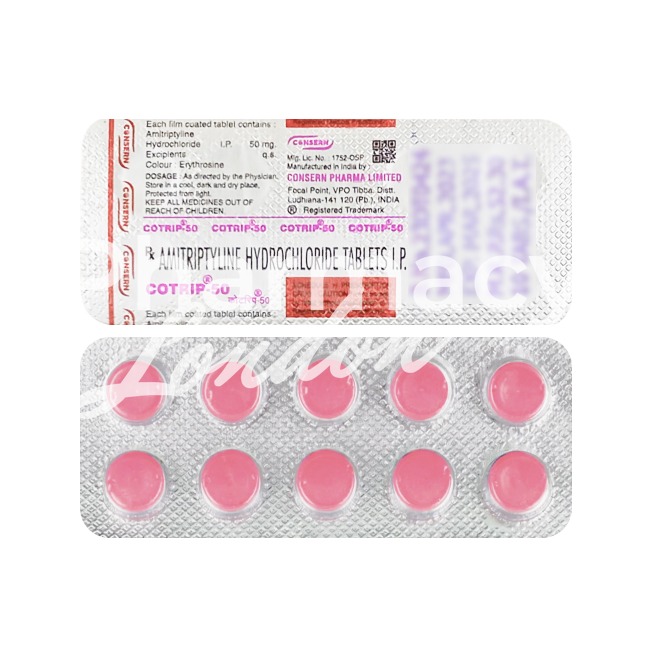
- Amitriptyline from Pharmacy London is supplied as 10mg (30 to 180 tablets), 25mg (30 to 360), 50mg (60 to 360) and 75mg (30 to 180), and UK orders arrive within 9–21 days.
- A tricyclic antidepressant, it raises serotonin and noradrenaline levels and also dampens pain signalling, which is why small doses are widely used for nerve pain.
- Pain relief may take a few weeks to build and an effect on low mood four to six weeks; dry mouth, constipation, drowsiness and dizziness on standing are common early on.
- Most people take it once a day in the evening to limit daytime grogginess; because 75mg is not a UK-licensed tablet strength, the prescriber should confirm how each dose is made up.
- It can interact with other antidepressants, tramadol and some heart medicines, and is avoided after a recent heart attack; amitriptyline is a prescription-only medicine in the UK.
Legal status and availability in the UK
Amitriptyline is a prescription-only medicine (POM) in the UK.
In our online pharmacy, amitriptyline is available without a prescription, with discreet delivery to the United Kingdom in 9–21 days.
Basic amitriptyline information
- INN (international nonproprietary name): Amitriptyline (as amitriptyline hydrochloride)
- Brand names available in the United Kingdom: generic amitriptyline is commonly supplied in the UK
- ATC code: N06AA09, classified under nervous system medicines and tricyclic antidepressants
- Forms & dosages: tablets 10 mg, 25 mg, 50 mg
- Manufacturers in the United Kingdom: numerous generic manufacturers; pack sizes can vary
- Registration status in the United Kingdom: Prescription-only medicine
- OTC / Rx classification: Prescription only (Rx)
Clinical effectiveness in the United Kingdom
Why do GPs still prescribe a medicine that has been around for decades?
Because for the right patient, amitriptyline can be effective and familiar.
In NHS care it is used most often for neuropathic pain, migraine prevention and selected depression cases, especially where sedation at night may help rather than hinder.
Many people are surprised when a “sleepy tablet” is given for pain, but that bedtime effect is often exactly why a clinician chooses it.
It can be useful after or alongside SSRIs and SNRIs when those medicines are not tolerated or have not helped enough.
Response is not instant, though.
For depression, the usual starting dose is 25–50 mg/day and the usual range is 75–150 mg/day, with full effect often taking 4–8 weeks.
For pain and headache, starting doses are usually 10–25 mg at bedtime, with review after 2–4 weeks to see whether there is enough benefit.
| Use | Typical review point | What patients often notice first |
|---|---|---|
| Depression | 4–8 weeks | Sleep improvement, then mood changes later |
| Pain or migraine | 2–4 weeks | Better sleep and reduced night pain |
That is why counselling usually focuses on bedtime use, gradual dose changes and patience with the early weeks of treatment.
In practice, effectiveness is often judged by function: better sleep, fewer pain flares, fewer headaches and a manageable side-effect profile.
Indications and expanded uses
What is it actually licensed for, and what is only used in special cases?
The answer matters because amitriptyline has both standard and off-label roles.
- Licensed
- Major depression, neuropathic pain, prophylaxis of chronic tension-type headache and migraine prophylaxis are the core uses reflected in UK prescribing.
- Common off-label
- Fibromyalgia, insomnia linked to pain, and some other chronic pain syndromes are sometimes managed with low-dose amitriptyline.
- Specialist use
- Occasional paediatric use for enuresis or migraine, and selected cases where specialist supervision is needed.
Off-label use is most common when a patient has been given it for fibromyalgia or persistent night-time pain.
That does not mean it is unusual or inappropriate; it simply means the dose and monitoring need to match the condition and the person.
It is prescription only in the UK, so a clinician needs to judge whether the benefits outweigh the risks.
The uses UK patients are most familiar with tend to cluster around pain and migraine, because low doses can be enough and the sedation can be helpful at night.
When depression management has not gone well with SSRIs, a tricyclic antidepressant may still have a place, particularly if the person has trouble sleeping or needs a different mechanism of action.
Composition and brand landscape
Are the different box names all the same medicine?
Yes, the active ingredient is the same.
The UK is a generic-led market, so most patients simply receive “amitriptyline” on the label rather than a well-known brand.
Packaging differs because the medicine is off-patent and supplied by many companies.
| Form | Strengths | Availability note |
|---|---|---|
| Tablets | 10 mg, 25 mg, 50 mg | Generic |
Because it is widely available as a generic medicine, pack appearance and supplier can change without the treatment itself changing.
That can worry patients who receive a different-looking box, but the active ingredient should remain amitriptyline unless the prescription says otherwise.
Contraindications and special precautions
Who should avoid amitriptyline, and who needs extra caution?
Start with the absolute exclusions, then move to higher-risk groups.
| Category | Examples | Practical note |
|---|---|---|
| Avoid | Hypersensitivity, recent myocardial infarction, MAOI use within 14 days | Do not start without medical review |
| Use caution | Seizure disorders, angle-closure glaucoma, urinary retention, prostatic hypertrophy, cardiovascular disease | Risk and benefit must be weighed carefully |
| Seek specialist advice | Suicidal risk, frailty, severe falls risk, significant liver impairment | Overdose toxicity is a major concern |
Practical issues matter too.
Drowsiness, sedation and dizziness can affect driving, especially when treatment starts or the dose changes.
Alcohol adds to the sedative effect and raises the falls risk, which is particularly relevant for older adults.
In elderly patients, clinicians often start at 10–25 mg at night and titrate more slowly, with lower maximums because of side effects and falls risk.
Suicidal risk deserves special mention because tricyclic antidepressants are highly toxic in overdose.
For that reason, prescribers may be more cautious about the quantity supplied and the follow-up arranged.
Dosage guidelines
How much should be taken, and when should it be taken?
The dose depends on the condition, the person’s age and how well the medicine is tolerated.
| Indication | Typical starting dose | Usual maintenance range |
|---|---|---|
| Major depression | 25–50 mg/day | 75–150 mg/day |
| Neuropathic pain / chronic pain | 10–25 mg at bedtime | 25–75 mg/day |
| Migraine prophylaxis | 10–25 mg at bedtime | Up to 75 mg/day |
| Fibromyalgia and other off-label use | 10–25 mg at bedtime | 25–75 mg/day |
For most pain and headache regimens, bedtime dosing is common because sedation is often part of the intended effect.
Children are only treated under specialist supervision, and liver impairment usually calls for dose reduction or avoidance because the medicine is extensively metabolised in the liver.
Renal impairment usually does not require a routine dose adjustment, but monitoring is still sensible.
If a dose is missed, it should be taken as soon as remembered unless the next dose is close; do not double dose.
Stopping suddenly is not a good idea either, so tapering is usually done slowly to reduce withdrawal symptoms.
The 10 mg and 25 mg strengths make cautious titration easier, especially when a clinician is aiming for the lowest effective dose.
Interactions overview
Which combinations matter most in real life?
The biggest concerns are medicines that increase sedation, serotonin effects, arrhythmia risk or seizure risk.
| Interaction type | Examples | Clinical importance |
|---|---|---|
| Major | MAOIs | Must be separated by at least 14 days |
| Clinically significant | Other antidepressants, sedatives, alcohol | Can increase sedation, confusion or cardiac risk |
| Needs review | Medicines that raise arrhythmia or seizure risk | May require specialist input |
Alcohol deserves a clear warning because amitriptyline and alcohol together can increase drowsiness and the risk of falls.
Some patients also notice that caffeine, tea or strong coffee can make palpitations or sleep problems feel worse, especially if they are already sensitive to stimulation.
That does not mean tea is banned, but it is worth watching symptoms closely.
If unwanted effects are reported, clinicians may review them through the MHRA Yellow Card scheme, which helps build the safety picture for UK medicines.
Amitriptyline interactions are best handled by checking the full medicine list, including over-the-counter products and herbal remedies.
Comparable medicines and prescribing preferences
How does amitriptyline compare with other common choices?
The answer usually depends on what the prescriber is trying to achieve: better sleep, less pain, fewer side effects or lower overdose risk.
| Medicine | Where it may be preferred | Main drawback compared with amitriptyline |
|---|---|---|
| Nortriptyline | Sometimes better tolerated in older adults | May be less sedating |
| Imipramine | Another tricyclic option | Similar class risks |
| Fluoxetine | Depression where an SSRI is preferred | Less useful for pain and sleep |
| Sertraline | Often used when an SSRI is suitable | Usually not chosen for neuropathic pain |
| Duloxetine | Depression with pain, or neuropathic pain | Different side-effect profile |
| Venlafaxine | Depression and some pain syndromes | May be less helpful at night-time sedation |
| Gabapentin / Pregabalin | Neuropathic pain | Not antidepressants; may suit different patients |
Amitriptyline is a first-generation tricyclic, so its anticholinergic burden is higher than most competitors.
That is a disadvantage in older adults, but a benefit in selected patients who need sedation at bedtime and pain control in one medicine.
Frequently asked questions
How long does amitriptyline take to work?
For pain or migraine, the first review is often after 2–4 weeks.
For depression, a full effect usually takes 4–8 weeks.
Can I drink alcohol with it?
Alcohol is best avoided or kept very limited because it can increase sedation, confusion and falls risk.
Why is it given for pain if it is an antidepressant?
At low doses, it can reduce neuropathic pain and improve sleep, so the effect is not only about mood.
What should I do if I miss a dose?
Take it when remembered unless the next dose is due soon, and do not double dose.
Guidelines for proper use
Safe use is often about the small things done consistently.
Take the dose at night if it makes you sleepy.
Do not stop suddenly unless a clinician has told you to do so.
Store tablets at room temperature, ideally 15–30°C, and keep blisters or bottles dry and away from light.
If travelling, protect the medicine from heat and moisture so the tablets stay in good condition.
For most people, follow-up is important when amitriptyline is being used for pain, migraine or depression, because the right dose is often found by gradual adjustment.
Support is available through the GP, community pharmacy, NHS 111 and patient-facing portals if questions come up between reviews.
Urgent help is needed if overdose is suspected.
Severe cardiac arrhythmias, seizures and CNS depression are medical emergencies and need immediate hospital management.
That is why amitriptyline should be stored carefully and taken only as prescribed.
Delivery across the United Kingdom
| City | Region | Delivery time |
|---|---|---|
| London | Greater London | 9–21 days |
| Birmingham | West Midlands | 9–21 days |
| Manchester | North West England | 9–21 days |
| Leeds | West Yorkshire | 9–21 days |
| Glasgow | Scotland | 9–21 days |
| Edinburgh | Scotland | 9–21 days |
| Liverpool | North West England | 9–21 days |
| Bristol | South West England | 9–21 days |
| Sheffield | South Yorkshire | 9–21 days |
| Newcastle upon Tyne | North East England | 9–21 days |
| Cardiff | Wales | 9–21 days |
| Belfast | Northern Ireland | 9–21 days |
| Norwich | East of England | 9–21 days |
| Exeter | South West England | 9–21 days |
| Aberdeen | Scotland | 9–21 days |



