
Biltricide
In brief
- Biltricide (praziquantel) is a prescription-only medicine in the UK.
- Biltricide is used to treat schistosomiasis and certain fluke infections such as clonorchiasis and opisthorchiasis. Its active ingredient, praziquantel, works by damaging the parasite’s outer surface and increasing calcium permeability, which paralyses and kills the worms.
- The usual dose depends on the infection: for schistosomiasis, 20 mg/kg per dose taken 3 times in one day; for clonorchiasis or opisthorchiasis, 25 mg/kg per dose taken 3 times in one day. Doses are usually given at 4–6 hour intervals.
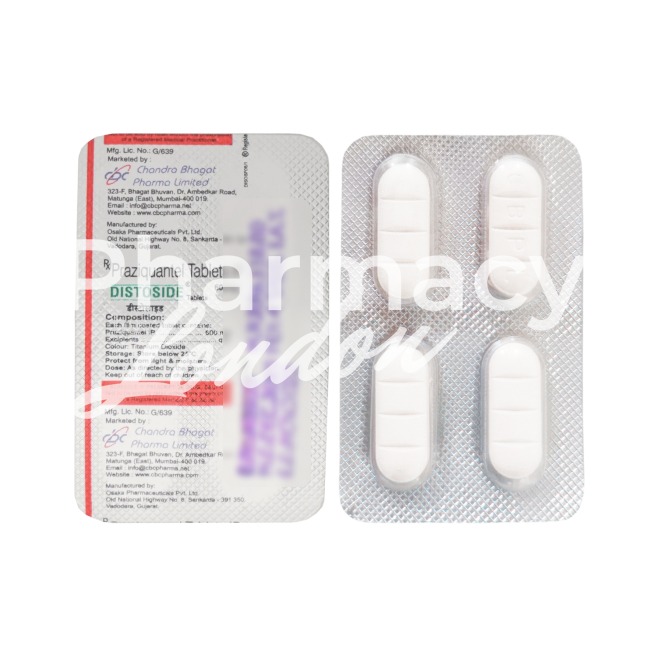
- Biltricide is usually taken by mouth as 600 mg film-coated tablets. In some cases, tablets may be crushed for children, and oral suspension may be compounded where needed.
- It begins working within a few hours after the first dose, although symptom improvement may take longer as the body clears the dead parasites.
- The antiparasitic effect is essentially over the treatment day, since Biltricide is usually given as a one-day course; however, its clinical effect continues as the infection resolves over the following days.
- Alcohol is best avoided during treatment, as it may worsen dizziness, stomach upset, and drowsiness.
- The most common side effects are nausea, abdominal pain, vomiting, diarrhoea, dizziness, headache, and drowsiness.
- Would you like to try Biltricide without a prescription?
Legal status in the UK
Biltricide (praziquantel) is a prescription-only medicine in the UK.
Basic Biltricide information
- INN (international nonproprietary name): Praziquantel.
- Brand names: Biltricide.
- ATC code: P02BA01.
- Forms & dosages: Film-coated 600 mg tablets; oral suspension is not widely available and may be compounded for children.
- Manufacturers: Bayer AG/Bayer Healthcare (brand); generic praziquantel is also made by other manufacturers.
- Registration status in the United Kingdom: Prescription-only medicine.
- OTC / Rx classification: Prescription-only (Rx).
- Standard dosage guidelines: Schistosomiasis 20 mg/kg per dose, 3 doses in one day; clonorchiasis/opisthorchiasis 25 mg/kg per dose, 3 doses in one day.
Clinical effectiveness of praziquantel in NHS and travel medicine settings
Patients usually want to know whether biltricide works quickly and properly.
In day-to-day practice, praziquantel performs well for schistosomiasis in UK practice, with strong cure or egg-reduction rates when the diagnosis and dose are right.
It is also highly effective for clonorchiasis and opisthorchiasis when used according to the standard regimen.
The reason one-day treatment is standard is straightforward: the approved dosing is split across the same day, rather than stretched over several days.
That keeps treatment simple for families and helps clinics organise follow-up.
Children over 1 year use the same mg/kg approach, which is often reassuring for parents who worry that a child will need a totally different medicine.
- What patients usually notice after treatment: reduced worm-related symptoms over time, reassurance after specialist review, and no need for a long course in routine use.
- What may require review: persistent fever, worsening abdominal symptoms, severe dizziness, or symptoms that suggest the original diagnosis needs reassessment.
In the NHS, patients may be referred by a GP to infectious disease or tropical medicine clinics, or reviewed through a travel clinic after foreign exposure.
If someone was diagnosed abroad, follow-up testing can differ, so clinicians often individualise the plan rather than offering a one-size-fits-all answer.
Uses and where Biltricide fits in UK practice
Biltricide fits into UK care as a prescription-only antiparasitic medicine used for schistosomiasis and selected fluke infections.
Access is usually clinician-led rather than over the counter.
Labelled use is straightforward.
Specialist use becomes relevant when there is eosinophilia after freshwater exposure, a travel history from an endemic area, or uncertainty about which parasite is involved.
- Labelled use
- Use for schistosomiasis and selected fluke infections according to product information.
- Off-label use
- Use outside the exact approved wording, only when a clinician judges it appropriate.
- Specialist use
- Assessment and treatment in tropical medicine, infectious disease, or complex travel medicine settings.
Prescription-only status is important because diagnosis, dosing, and follow-up can vary with species, age, liver function, and whether the patient was infected abroad.
In our online pharmacy, Biltricide is available without a prescription, with discreet delivery to the United Kingdom in 9–21 days, but it still remains a medicine that deserves proper clinical checking.
Composition, strength and brand landscape
Biltricide is praziquantel in film-coated 600 mg tablets.
It is the strength UK patients are most likely to see.
| Brand name | Tablet strength | Common pack size |
|---|---|---|
| Biltricide | 600 mg | 6 or 12 tablets |
| Generic praziquantel | 600 mg | Varies |
| Compounded oral suspension | Not specified | Not widely available |
Bayer is the brand manufacturer; generic praziquantel is also made by other manufacturers.
Oral suspension is not widely available, but specialist pharmacies may compound it for children when needed.
Contraindications, precautions, and everyday restrictions
People often want to know what makes biltricide unsafe.
The main exclusions are clear, and they matter more if the patient is already on several NHS medicines or has a long-term condition.
- Do not use if there is known hypersensitivity to praziquantel or any product ingredient.
- Do not use in ocular cysticercosis, because killed parasites in the eye can worsen disease.
- Use extra caution in severe hepatic impairment, especially advanced cirrhosis.
- Use extra caution if there is a history of seizures or epilepsy.
- Use extra caution if the patient has cardiac arrhythmias.
Elderly patients usually do not need a routine dose adjustment unless liver or kidney problems are present.
For everyday life, the main issue is short-term caution after dosing, because dizziness, drowsiness, and malaise are common enough to matter.
Driving, drinking alcohol, and returning to safety-critical work should be considered carefully if the person feels unwell.
- What to avoid: driving if dizzy, alcohol if nauseous or light-headed, and heavy tasks if drowsy.
- When to seek urgent help: seizure, severe allergic reaction, marked jaundice, or confusion after dosing.
Dosage guidelines and treatment regimens used in practice
Most patients are surprised by how short the course is.
The standard regimens are single-day courses split into two or three doses, taken with food and spaced 4 to 6 hours apart.
That is why clinicians and pharmacists spend time explaining the schedule clearly before the first tablet is taken.
| Indication | Total dosage | Regimen |
|---|---|---|
| Schistosomiasis | 20 mg/kg per dose | 3 doses in one day |
| Clonorchiasis / Opisthorchiasis | 25 mg/kg per dose | 3 doses in one day |
Children over 1 year generally use the same mg/kg dosing as adults, so the practical difference is only the number of tablets.
Smaller children may need crushed tablets or pharmacy support under specialist supervision.
Missed doses should be taken as soon as remembered on the same day, unless the next dose is already due.
Overdose can increase GI symptoms, confusion, and seizure risk, so urgent medical help is needed if the amount taken is too high.
Food, drink, and medicine interactions
Food is usually helpful with praziquantel because it improves tolerability.
That is useful for UK patients who may already feel queasy from infection or from the medicine itself.
Alcohol is best avoided if the patient is dizzy or nauseous, even though the main concern is practical rather than a famous severe interaction.
Caffeine from tea or coffee is not known as a major interaction, but sensitive people may find it worsens nausea.
The product data also warns that hepatic impairment may increase blood levels because first-pass metabolism is reduced, so liver disease deserves careful review.
- Common self-management points: take with food, drink water, and avoid alcohol if unwell.
- Medicines to review: any prescription medicine that affects liver function, any seizure medicine, and any treatment already causing dizziness or confusion.
Checking all medicines through NHS services or a pharmacy team is sensible, and adverse effects can be reported through the Yellow Card pathway.
Comparable medicines and when alternatives may be considered
Alternatives are limited for schistosomiasis and many fluke infections, which is why praziquantel remains the gold standard.
Some older medicines exist, but they are narrower in use or less widely available.
- Metrifonate: used for some schistosomiasis, but far less commonly used now.
- Oxamniquine: specific for S. mansoni.
- Albendazole and mebendazole: not effective substitutes for schistosomes or flukes, though useful for other worms.
Veterinary worming products are not substitutes for human medicines; only an appropriate human medicine prescribed by a clinician should be used.
For UK prescribing, the key comparison is not just efficacy, but also availability, tolerability, and whether the parasite involved is actually one that praziquantel treats well.
Pros and cons at a glance are simple: high efficacy, short course, strong specialist support, but prescription-only access and the need for correct diagnosis.
Frequently asked questions about Biltricide
Do I need a prescription?
Yes. In the UK, Biltricide is a prescription-only medicine and should be matched to the right diagnosis.
What if I feel sick after the first dose?
Mild nausea is common; take the remaining doses with food as directed, but seek help if symptoms are severe or you feel faint.
Is praziquantel safe in children?
Children over 1 year generally use the same mg/kg dosing as adults, which is why paediatric dosing is weight-based rather than age-based alone.
Proper use, pharmacist counselling, and NHS support
Good counselling makes a big difference with biltricide.
The main practical points are simple, but they matter.
Take it with food.
Space the doses as directed.
Do not double dose if one is missed.
Store it correctly.
And ask for help if side effects seem more than mild.
- When to seek help now: seizure, severe allergy, confusion, chest symptoms, or major worsening of liver symptoms.
- When to ask your pharmacist: missed dose, nausea, how to split tablets, or whether another medicine could interact.
Storage is at room temperature, between 15 and 30°C, away from moisture and excessive heat.
Missed doses should be taken on the same day if possible, and overdose needs urgent medical review because there is no specific antidote.
For children, crushed tablets or compounded suspensions may be used only under supervision.
Support may come through the NHS App, patient portals, GP messaging, pharmacy consultation rooms, or specialist tropical medicine advice.
Delivery across the United Kingdom
| City | Region | Delivery time |
|---|---|---|
| London | England | 9–21 days |
| Birmingham | England | 9–21 days |
| Manchester | England | 9–21 days |
| Leeds | England | 9–21 days |
| Liverpool | England | 9–21 days |
| Newcastle upon Tyne | England | 9–21 days |
| Sheffield | England | 9–21 days |
| Bristol | England | 9–21 days |
| Edinburgh | Scotland | 9–21 days |
| Glasgow | Scotland | 9–21 days |
| Cardiff | Wales | 9–21 days |
| Belfast | Northern Ireland | 9–21 days |
| Derby | England | 9–21 days |
| Norwich | England | 9–21 days |
| Exeter | England | 9–21 days |



