
Clomiphene
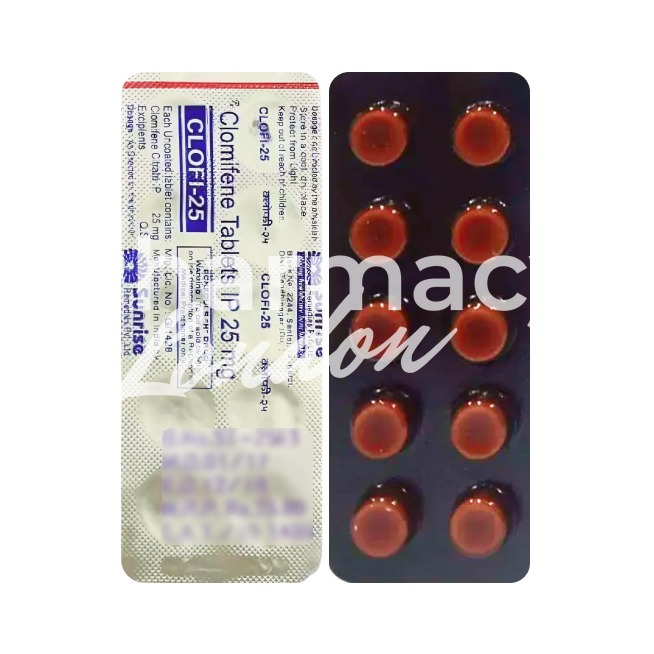
In brief
- Clomifene is a prescription-only medicine (POM) in the UK and should be used under medical supervision.
- Clomifene is used mainly to treat female infertility due to anovulation and may be used off-label in some cases of male infertility. It is a selective oestrogen receptor modulator (SERM) that blocks oestrogen feedback at the hypothalamus and pituitary, increasing gonadotropin release and stimulating ovulation.
- The usual dose for female infertility is 50 mg once daily for 5 days, usually starting on day 3 to 5 of the menstrual cycle; if needed, the dose may be increased in later cycles up to 100 mg daily. For off-label male use, 25–50 mg daily may be used for 3 to 6 months.
- It is taken by mouth as 50 mg tablets, supplied in blister packs.
- Clomifene does not work immediately; in women, ovulation is usually triggered within the treatment cycle, typically several days after the 5-day course has been completed, while fertility benefits may be seen over repeated cycles.
- The duration of action is one treatment cycle in women, with courses often repeated for up to 6 ovulatory cycles. In men, treatment may continue for 3 to 6 months, sometimes longer with monitoring.
- Alcohol is best avoided or kept to a minimum, as it may worsen side effects such as dizziness, nausea or visual disturbance and is not ideal when trying to conceive.
- The most common side effects are hot flushes, headache, dizziness, nausea, abdominal discomfort, mood changes, breast tenderness, and visual symptoms such as blurred vision or light sensitivity.
- Would you like to try Clomiphene without a prescription?
Legal status and availability in the UK
Clomifene is a prescription-only medicine (POM) in the UK, supplied on the NHS or privately.
Our online pharmacy offers clomifene without a prescription, with discreet delivery to the United Kingdom in 9–21 days.
Basic clomifene information
- INN (international nonproprietary name): Clomifene (alternatively spelled Clomiphene)
- Brand names available in the United Kingdom: Clomid
- ATC code: G03GB02
- Forms & Dosages: tablets 50mg in blister packs
- Manufacturers in the United Kingdom: Sanofi (Clomid) and generic manufacturers
- Registration status in the United Kingdom: MHRA licensed
- OTC / Rx classification: Prescription-only (Rx)
UK fertility guidance still places clomifene as a familiar oral ovulation stimulant, especially for anovulatory infertility.
As a selective oestrogen receptor modulator, or SERM, it works on the hypothalamic-pituitary-ovarian axis rather than acting as a hormone replacement.
That is why pharmacy records and fertility clinic notes often file it under ATC code G03GB02, which helps with prescribing audit and pharmacovigilance.
In practical UK practice, it is still often chosen first when an oral option is needed before injectables, particularly in NHS pathways where access and clinic capacity matter.
Clomifene can improve ovulation rates, but live birth outcomes vary by cause of infertility, age, BMI and whether monitoring is available.
| Treatment | Live birth outcome | Multiple pregnancy risk | Monitoring burden |
|---|---|---|---|
| Clomifene | Good for anovulatory infertility | Present | Moderate |
| Letrozole | Often preferred in some PCOS cases | Lower | Moderate |
| Gonadotropins | Effective but more intensive | Higher | High |
For UK patients, the key point is not that clomifene is “old-fashioned”, but that it remains a useful oral option when the clinical picture fits and the pathway is properly monitored.
Clinical effectiveness in NHS fertility pathways
Wondering whether clomifene is actually doing the job, or just adding another month of waiting?
In NHS fertility treatment, clomifene is mainly used to trigger ovulation in people with anovulation or irregular cycles.
It is typically prescribed when the clinic thinks oral ovulation tablets are a sensible first step.
Standard practice is a 50mg daily course for 5 days, often started early in the cycle, with the dose adjusted if response is poor.
Some patients ovulate quickly and move on to timed intercourse or further investigation.
Others need repeat cycles, ultrasound checks, or a different drug altogether.
- Response is often better when baseline fertility factors have already been reviewed.
- BMI, age, and partner semen analysis can all affect treatment response.
- PCOS is common, but outcomes still vary from one patient to another.
- Clear counselling and ovulation tracking often improve patient confidence and continuation.
In many NHS areas, some patients are started in secondary care rather than by the GP, especially where fertility clinic waiting times are long and monitoring is needed from the outset.
That is one reason community pharmacists are often asked about cycle monitoring, side effects and whether the medicine should be continued if visual symptoms appear.
| Practical point | What usually happens |
|---|---|
| Initial regimen | 50mg daily for 5 days |
| Repeat treatment | Up to 6 cycles |
| Monitoring | Ultrasound or ovulation tracking where available |
| Continuation concerns | Visual symptoms or ovarian enlargement may stop treatment |
When counselling is clear, patient outcomes are often better because expectations are more realistic and side effects are picked up early.
Indications and expanded uses in UK practice
What is clomifene actually licensed for, and when is a doctor using it beyond the usual route?
In the UK, clomifene is MHRA-licensed and prescription-only.
The main indication is female infertility due to anovulation.
- Standard indication
- Anovulatory female infertility, usually managed by a fertility specialist or endocrinologist.
- Off-label use
- Male infertility, generally at 25–50mg daily for 3–6 months with semen analysis monitoring.
- Not indicated
- Paediatric use and routine elderly use.
Private clinics may discuss broader regimens, especially in PCOS or unexplained infertility, but those decisions are still built around specialist review and repeat-cycle assessment.
In practice, repeat-cycle treatment depends on whether ovulation has started, whether pregnancy has occurred, and whether any safety issue has emerged.
For women with PCOS, the discussion often includes whether clomifene citrate tablets or another ovulation treatment may give a better chance of success.
For men, use is far less routine and should not be treated like a simple over-the-counter fertility supplement.
Composition, brand landscape and UK naming conventions
Why do some leaflets say clomifene and others say clomiphene?
In UK usage, the official spelling is clomifene, although clomiphene is also widely seen in medical literature.
The medicine is a prototypical SERM with both agonist and antagonist actions depending on the tissue involved.
Patients usually recognise it by the brand name Clomid, even when the pack contains generic clomifene tablets.
The ATC code G03GB02 is important because it supports traceable pharmacy records and side-effect reporting.
Contraindications and special precautions for UK patients
Before starting clomifene, what should be checked for safety?
Screening matters because this medicine is not suitable for everyone and pregnancy must be excluded first.
It is contraindicated in pregnancy, liver disease or impairment, hypersensitivity, ovarian cysts not due to PCOS, unexplained uterine bleeding, and organic intracranial lesions or tumours.
Cautions include PCOS, enlarged ovaries, thyroid or adrenal dysfunction, endometriosis and a history of fibroids.
- Tell the clinic about any previous liver problems or unexplained bleeding.
- Seek urgent review for severe abdominal pain, visual changes or rapid abdominal swelling.
- Avoid driving if blurred vision, photophobia or visual spots appear.
- Be cautious with alcohol if nausea, dizziness or hot flushes are troublesome.
Red flag: severe abdominal pain, new visual disturbance, or sudden ovarian enlargement needs urgent medical review.
NHS and private fertility clinics usually want a baseline history, and sometimes a scan, before starting treatment.
That is particularly important when the patient already has PCOS or a known ovarian cyst history.
Dosage guidelines and cycle regimens
How is clomifene taken, and what happens if the first cycle does not work?
The standard clomifene dosage for female anovulatory infertility is 50mg daily for 5 days.
Cycles usually start on day 3 to 5 of the menstrual cycle.
If response is inadequate, the dose may be increased in a later cycle, up to 100mg per day.
Courses may repeat for up to 6 ovulatory cycles, provided the patient remains under review.
Off-label male infertility regimens usually use 25–50mg daily for 3 to 6 months, with semen analysis checks.
| Indication | Starting dose | Maximum | Usual duration |
|---|---|---|---|
| Female anovulatory infertility | 50mg daily for 5 days | 100mg/day | Up to 6 cycles |
| Male infertility, off-label | 25–50mg daily | Not specified | 3–6 months |
- If a dose is missed and remembered the same day, take it then.
- If a whole day is missed, skip it and do not double the next dose.
- Overdose needs immediate medical attention because nausea, vomiting, visual disturbance and ovarian enlargement can occur.
There is no formal dose adjustment for kidney function, but significant hepatic disease is a reason to avoid treatment or use strict monitoring only.
Interactions, food and drink considerations
Are there strict food rules with clomifene, or can it be taken normally?
There are no major routine food restrictions, which is one reason oral ovulation stimulant treatment is popular.
Alcohol may worsen dizziness, hot flushes or nausea, so it is sensible to keep intake low if those symptoms appear.
Clomifene interactions are usually most relevant when another fertility medicine, hormonal treatment or ovulation agent is already in the plan.
- Check before combining with any other prescribed fertility medicine.
- Keep OTC supplements and herbal products listed for the clinic or pharmacist.
- Moderate tea or coffee intake is usually discussed as part of fertility counselling, but it is less important than avoiding medicine mix-ups.
- Report unusual or severe effects through the MHRA Yellow Card system.
Pharmacists often find that the biggest risk is not a classic drug interaction, but confusion between a supplement bought online and a prescribed fertility tablet.
Comparable medicines and when NHS prescribers may prefer them
When does a clinician choose something other than clomifene?
The main fertility alternatives are letrozole, gonadotropins, tamoxifen and metformin.
Letrozole is increasingly used in PCOS-related ovulation induction and may have better outcomes in some cases.
Gonadotropins are injectable and need closer supervision.
Metformin can help when insulin resistance is part of the picture, but it is not a direct substitute for an ovulation stimulant.
- Clomifene: oral, familiar and widely recognised.
- Letrozole: often preferred in some PCOS cases.
- Gonadotropins: effective, but intensive.
- Metformin: supportive, not a stand-alone replacement for all patients.
| Medicine | Main strength | Main limitation |
|---|---|---|
| Clomifene | Oral | Multiple pregnancy risk and variable response |
| Letrozole | Useful in PCOS | Not right for everyone |
| Gonadotropins | Strong stimulation | Injectable and closely monitored |
| Metformin | Helps insulin resistance | Not a direct ovulation tablet |
When oral induction does not work, the next step may be IVF, natural-cycle planning, or a different fertility pathway.
Frequently asked questions about clomifene
How long does clomifene take to work?
Some people ovulate in the first cycle, while others need repeat treatment or a different medicine.
Can I drink alcohol or drive?
Alcohol may worsen dizziness or hot flushes, and driving should be avoided if visual changes appear.
What if I miss a dose?
Take it the same day if you remember; if a day is missed, skip it and do not double the next dose.
Why would my doctor choose letrozole instead?
Letrozole may be preferred in some PCOS cases because outcomes can be better for certain patients.
Overdose symptoms such as nausea, vomiting, visual disturbance and ovarian enlargement need urgent medical attention.
Guidance for proper use and pharmacist counselling in the United Kingdom
What should a patient actually do once the prescription is in hand?
Take the tablets at the same time each day for 5 days, as instructed by the clinic.
Most courses start on day 3 to 5 of the menstrual cycle, so the calendar matters.
Follow-up scans or ovulation tests are especially important in PCOS or repeated cycles.
If vision changes, severe pain or heavy bleeding occur, stop and seek help promptly.
- Store clomifene at room temperature, 15–30°C.
- Keep it protected from moisture and light.
- Leave it in the original packaging until use.
- Do not refrigerate or freeze it.
Pharmacist counselling usually includes how to recognise ovarian enlargement, when to ring the fertility clinic, and when NHS 111 is the right first contact.
For ongoing support, patients can use the fertility clinic, GP, community pharmacist, NHS 111 and NHS patient portals.
Delivery across the United Kingdom
| City | Region | Delivery Time |
|---|---|---|
| London | England | 9–21 days |
| Birmingham | England | 9–21 days |
| Manchester | England | 9–21 days |
| Leeds | England | 9–21 days |
| Glasgow | Scotland | 9–21 days |
| Edinburgh | Scotland | 9–21 days |
| Liverpool | England | 9–21 days |
| Bristol | England | 9–21 days |
| Cardiff | Wales | 9–21 days |
| Belfast | Northern Ireland | 9–21 days |
| Sheffield | England | 9–21 days |
| Nottingham | England | 9–21 days |
| Southampton | England | 9–21 days |
| Aberdeen | Scotland | 9–21 days |
| Leicester | England | 9–21 days |



