
Colchicine
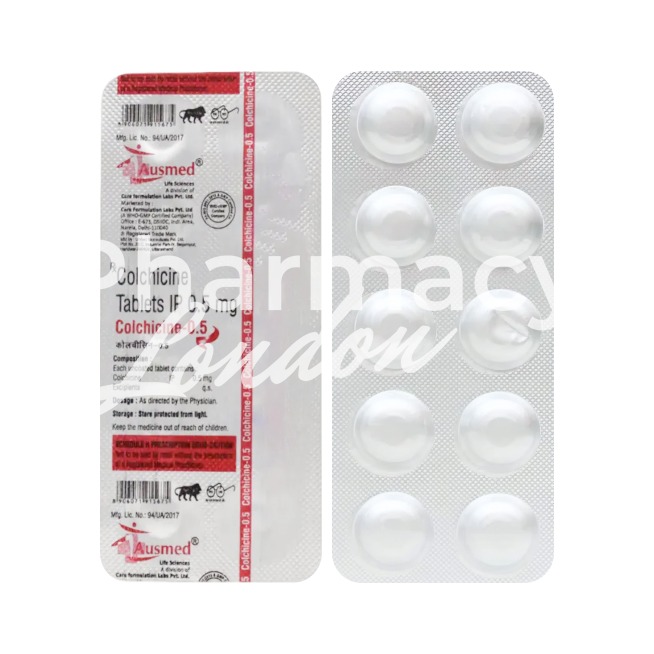
In brief
- Colchicine is a prescription-only medicine (POM) in the UK.
- Colchicine is used for the treatment and prevention of gout, and also for familial Mediterranean fever. It works by reducing inflammation, mainly by inhibiting microtubule formation and decreasing neutrophil activity.
- The usual dose depends on the condition: for an acute gout flare in adults, 500 micrograms two to four times daily until relief (maximum 6 mg per course); for prevention of gout, 500 micrograms once or twice daily; for familial Mediterranean fever, typically 1.2–2.4 mg per day in divided doses.
- The form of administration is oral, usually as tablets. Oral solution is rare.
- The effect of colchicine usually begins within about 1–2 hours after oral dosing, although symptom relief may continue to build over several hours.
- The duration of action is several hours for acute use, while prophylactic treatment may be continued daily for long-term control as directed by a physician.
- Alcohol should be avoided or limited, especially during a gout flare, as it may worsen gout symptoms and increase stomach irritation.
- The most common side effects are diarrhoea, nausea, abdominal pain, and vomiting.
- Would you like to try colchicine without a prescription?
Legal status and availability in the UK
Colchicine is a prescription-only medicine (POM) in the UK.
In our online pharmacy, colchicine is available without a prescription, with discreet delivery to the United Kingdom in 9–21 days.
Basic colchicine information
- INN (international nonproprietary name): Colchicine
- Brand names available in the United Kingdom: generic colchicine
- ATC code: M04AC01
- Forms and strengths: tablets 0.5 mg, 1 mg; oral solution is rare
- Manufacturers: Sanofi, Teva and other generic manufacturers
- Registration status in the United Kingdom: Prescription-only medicine (POM)
- OTC / Rx classification: Prescription medication (Rx)
Clinical effectiveness in NHS practice
Does it actually help when a gout attack starts?
In routine NHS care, colchicine for gout is valued because it can reduce pain, shorten flare duration, and help prevent repeat attacks when used early or as prophylaxis.
That is why patients are often told to act at the first sign of a flare rather than waiting for the joint to become fully inflamed.
When taken correctly, colchicine tablets can make a noticeable difference, but real-world effectiveness depends on timing, adherence and the right dose.
Diarrhoea is the symptom patients mention most often, and missed doses are another common issue, especially when people are juggling work, pain and a late-night flare.
- Benefits: early symptom relief, flare prevention, and a useful role when NSAIDs are unsuitable.
- Limitations: gastrointestinal side effects, reduced tolerance in some patients, and lower suitability in kidney or liver problems.
- Practical point: it works best when taken promptly and exactly as prescribed.
Indications and expanded uses in UK care
What is colchicine actually prescribed for in the UK?
The main licensed uses are gout flare treatment and gout prophylaxis; familial Mediterranean fever (FMF) is an important long-term off-label indication.
Specialist teams may also use it in pericarditis, usually alongside an NSAID, where it is part of a broader anti-inflammatory plan.
It is also studied in cardiovascular settings, including post-MI prevention, but that should be understood as research rather than routine NHS prescribing.
- Licensed use
- Gout flare treatment and gout prophylaxis.
- Specialist or off-label use
- FMF, pericarditis, usually with NSAIDs, and selected cardiovascular research settings.
The standard adult acute gout regimen is 500 micrograms two to four times daily until symptoms are relieved, with a maximum of 6 mg per course.
For FMF, maintenance treatment is typically 1.2 to 2.4 mg daily in divided doses.
Composition, strengths and United Kingdom brand landscape
What is in the pack?
Colchicine is the active ingredient, usually supplied as blister-packed tablets.
Generic prescribing is normal in the UK.
Manufacturers include Sanofi, Teva, Pfizer, Takeda, Hikma, Apotex, Juno and Arrow Pharma.
Colchicine belongs to ATC code M04AC01, which places it in the antigout medicine group.
Contraindications and special precautions
Who should not take it, and who needs extra checks first?
The biggest safety issues are severe renal or hepatic impairment, hypersensitivity, and concurrent use with strong CYP3A4 inhibitors or P-gp inhibitors.
Those combinations can raise toxicity risk sharply, so they need careful review before any prescription is issued or repeated.
Older adults, people with mild-to-moderate kidney or liver problems, patients with gastrointestinal disease, and those who are pregnant or breastfeeding all need an individual risk-benefit discussion.
If diarrhoea or vomiting becomes troublesome, people may feel too unwell to drive or do normal activities safely.
| Risk level | Who this applies to | Usual action |
|---|---|---|
| Avoid | Severe renal or hepatic impairment, hypersensitivity, strong CYP3A4 or P-gp inhibitor co-use | Do not start until reviewed urgently |
| Use with caution | Mild-to-moderate renal or hepatic impairment, older adults, gastrointestinal disease | Consider dose reduction and closer monitoring |
| Discuss urgently | Pregnancy or breastfeeding, severe side effects, new interacting medicines | Seek prescriber or pharmacist advice promptly |
Dosage guidelines in UK practice
How do UK clinicians usually explain the dose without causing confusion?
The adult acute gout regimen is 500 micrograms two to four times daily, started at the first sign of a flare and continued until symptoms are relieved, with a maximum of 6 mg per course; a course should not be repeated within 3 days.
For prophylaxis, 500 micrograms once or twice daily is typical.
For FMF, the usual range is 1.2 to 2.4 mg daily in divided doses.
In pericarditis, 0.5 mg once or twice daily may be used with NSAIDs.
| Condition | Usual adult dose | Duration note |
|---|---|---|
| Acute gout flare | 500 micrograms 2–4 times daily (max 6 mg per course) | Until relief; do not repeat within 3 days |
| Gout prophylaxis | 500 micrograms once or twice daily | Review after 3 to 6 months |
| FMF | 1.2 to 2.4 mg/day in divided doses | Often long term |
| Pericarditis | 0.5 mg once or twice daily | Usually combined with NSAIDs |
- Check the exact strength on the label before taking a dose.
- Lower starting doses are often needed in older adults.
- Reduce or avoid treatment in renal or hepatic impairment, depending on severity.
- Children with FMF may start at 0.3 to 0.6 mg daily from age 4 years, with titration.
Interactions overview, including food, drink and MHRA reporting
Which interactions matter most in everyday pharmacy counselling?
The most important risks are strong CYP3A4 inhibitors and P-gp inhibitors, because they can push colchicine into toxic levels.
That is why a full medicine check is so important, especially if a patient has recently started another medicine.
- Strong CYP3A4 inhibitors: may raise colchicine levels and toxicity risk.
- P-gp inhibitors: may also increase exposure and side effects.
- Alcohol: can worsen gout control, so moderation is often advised.
- Tea and coffee: not major direct interaction concerns, but hydration still matters.
- Missed dose: take it when remembered unless the next dose is close; do not double up.
Overdose can be fatal and may cause gastrointestinal distress and multi-organ failure.
Any suspected adverse reaction can be reported through the MHRA Yellow Card scheme.
Comparable medicines and prescribing preferences
Where does colchicine sit next to the other gout medicines?
It is usually chosen for flare management or prevention, rather than to lower uric acid.
That is where allopurinol and febuxostat come in, because they target urate control rather than inflammation alone.
In FMF, NSAIDs or biologics may be used for resistant cases, but colchicine remains the core treatment for many patients.
- Colchicine: fast anti-inflammatory action and useful for flares.
- Allopurinol: preferred for urate lowering, not acute flare relief.
- Febuxostat: another urate-lowering option used when suitable.
- Downside of colchicine: GI effects and interaction risk can limit use.
NHS prescribers may switch or combine treatments depending on kidney function, urate target, flare frequency and comorbidities.
Frequently asked questions for United Kingdom patients
Can I get colchicine on the NHS?
Yes, if a GP or specialist prescribes it, and the prescription is usually sent electronically to your chosen pharmacy.
How quickly does it work for gout?
It works best when taken at the first sign of a flare, which is why early use matters so much.
What if I miss a dose?
Take it when remembered unless the next dose is close; do not double the dose.
When should I stop and seek urgent help?
Stop and seek help urgently if you have severe vomiting, severe diarrhoea, signs of overdose, or any concern about toxicity.
Guidelines for proper use and patient support
What helps most is a simple routine and a quick safety check before each course.
Take the exact prescribed strength, because tablet strengths can vary.
Start treatment early for a flare, but do not keep repeating acute doses without medical advice.
Check kidney and liver function if you have a relevant condition, and always mention every other medicine you take.
NHS support routes include your GP practice, NHS 111, your local pharmacist and patient portals for repeat prescriptions and medicine reviews.
Keep the tablets in their original packaging, stored at 15 to 30°C, away from moisture and light.
| Storage point | Advice |
|---|---|
| Temperature | Store at 15–30°C |
| Packaging | Keep in original blister pack |
| Protection | Keep away from moisture and light |
When in doubt, ask for pharmacist advice before taking another dose or ordering a repeat prescription.
Delivery across the United Kingdom
| City | Region | Delivery time |
|---|---|---|
| London | Greater London | 9–21 days |
| Birmingham | West Midlands | 9–21 days |
| Manchester | North West England | 9–21 days |
| Leeds | West Yorkshire | 9–21 days |
| Glasgow | Scotland | 9–21 days |
| Edinburgh | Scotland | 9–21 days |
| Liverpool | North West England | 9–21 days |
| Bristol | South West England | 9–21 days |
| Cardiff | Wales | 9–21 days |
| Newcastle upon Tyne | North East England | 9–21 days |
| Nottingham | East Midlands | 9–21 days |
| Sheffield | South Yorkshire | 9–21 days |
| Leicester | East Midlands | 9–21 days |
| Coventry | West Midlands | 9–21 days |
Summary and next steps
Colchicine remains a well-established prescription medicine for gout and FMF, with specialist use in pericarditis and ongoing research interest in cardiovascular prevention.
Its benefits depend on taking the right dose at the right time, while its main drawback is dose-related gastrointestinal upset and the need to avoid important interactions.
For UK patients, the safest approach is still the simplest one: confirm the strength, check other medicines, and get prompt advice if anything does not look right.



