
Etoricoxib
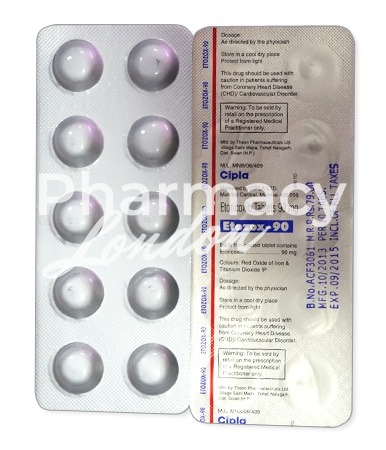
In stock
60mg · 90mg · 120mg
from 26,70 £
In brief
- Etoricoxib is a COX-2 selective anti-inflammatory used for osteoarthritis, rheumatoid arthritis, ankylosing spondylitis, acute gout and short-term pain after dental surgery.
- Supplied as an imported generic: three strengths (60, 90 and 120 mg), with boxes running from 30 up to 240 tablets.
- Prescription-only in the UK and taken once a day, at the lowest dose and for the shortest time that controls symptoms.
Etoricoxib explained: a COX-2 selective painkiller
Etoricoxib is a non-steroidal anti-inflammatory drug (NSAID) that acts selectively on the COX-2 enzyme, which drives pain and swelling in inflamed joints. According to the UK SmPC it is licensed for adults and young people aged 16 and over to relieve the symptoms of osteoarthritis, rheumatoid arthritis and ankylosing spondylitis, to ease the pain and inflammation of an acute gout attack, and for short-term treatment of moderate pain after dental surgery. The SmPC adds that the choice of a COX-2 inhibitor should rest on each person's overall risk profile. Compared with older anti-inflammatories, drugs of this type spare the COX-1 enzyme that helps to protect the stomach lining, although stomach bleeding can still occur.
Strengths and packs available
The tablets listed here are an imported generic in three strengths: 60 mg, 90 mg and 120 mg. Each strength comes in packs of 30, 60, 90, 120, 180 or 240 tablets. The 30 mg strength used as the starting dose in osteoarthritis is not offered on this page, so anyone advised to take that amount would need a different product. As the SmPC links the cardiovascular risk of etoricoxib to both dose and duration, the strength chosen should be the lowest that controls the symptoms.
Dose limits for each condition
One tablet is taken once a day, with or without food; taking it on an empty stomach may help it work a little faster. In osteoarthritis the usual dose is 30 mg, and no more than 60 mg a day should be used. Both rheumatoid arthritis and ankylosing spondylitis are normally managed on 60 mg, which may be raised to 90 mg if relief is insufficient and brought back down once things are stable. For a flare of gout the SmPC gives 120 mg once daily, used only while the attack lasts and never beyond eight days; after dental surgery the figure is 90 mg, again once daily, for three days at most. People with mild liver impairment should not exceed 60 mg a day, and those with moderate impairment 30 mg. It is up to the prescriber to choose the strength and decide how long it is taken.
Licensing and legal category in the UK
UK law classes etoricoxib as a prescription-only medicine (POM), so it is supplied against a valid prescription. The originator brand, Arcoxia, is licensed here alongside a number of generic film-coated tablets, and their SmPCs are available on the electronic medicines compendium. The imported tablets offered on this page are not a UK-licensed product.
Who should avoid it
The SmPC rules it out in active stomach ulcers or gastrointestinal bleeding; in people who have had asthma-like breathing problems, nasal polyps, swelling or hives after aspirin or another NSAID; during pregnancy and breastfeeding; in severe liver disease or when creatinine clearance is below 30 mL/min; in inflammatory bowel disease; in heart failure of NYHA class II to IV; in established ischaemic heart disease, peripheral arterial disease or cerebrovascular disease; and where blood pressure stays above 140/90 mmHg despite treatment. It is not licensed for anyone under 16. Blood pressure should be checked within two weeks of starting and at intervals afterwards, as the cardiovascular risk grows with dose and duration.
Interactions and side effects of etoricoxib
Etoricoxib can raise the INR in people on warfarin, weaken the effect of ACE inhibitors, angiotensin receptor blockers and diuretics, and increase lithium and methotrexate levels. Combining it with low-dose aspirin adds to the risk of stomach problems, and rifampicin lowers its blood levels markedly. Abdominal pain is the most frequently reported side effect; indigestion, heartburn, nausea, diarrhoea, wind, fluid retention with ankle swelling, raised blood pressure, palpitations, dizziness, headache and tiredness are also common. Stop taking the tablets and get medical help at once if you pass black, tarry stools, bring up blood, or develop chest pain, breathlessness or swelling of the face and throat.



