
Memantine
In stock
10mg
from 67,37 £
In brief
- Memantine is a prescription-only medicine for adults with Alzheimer's disease at the moderate or severe stage.
- Available as 10mg tablets in quantities of 30, 60, 90, 120 or 180.
- Treatment begins at 5mg a day and rises weekly to a usual, and maximum, dose of 20mg once daily.
Memantine: its role in moderate and severe Alzheimer's
Memantine works on NMDA receptors, the docking points for glutamate, one of the brain's main messenger chemicals. In Alzheimer's disease glutamate activity appears to be abnormally high, and this constant overstimulation may harm nerve cells involved in memory. Memantine partly blocks the receptor, reducing the excess signal without shutting down normal activity. According to the UK SmPC, the medicine is meant for adults only, and only once Alzheimer's has progressed beyond the mild stage to moderate or severe disease. It cannot stop the illness, but in some people it may help to maintain thinking, behaviour and the ability to manage everyday tasks for a while.
Tablet strength and UK licensing
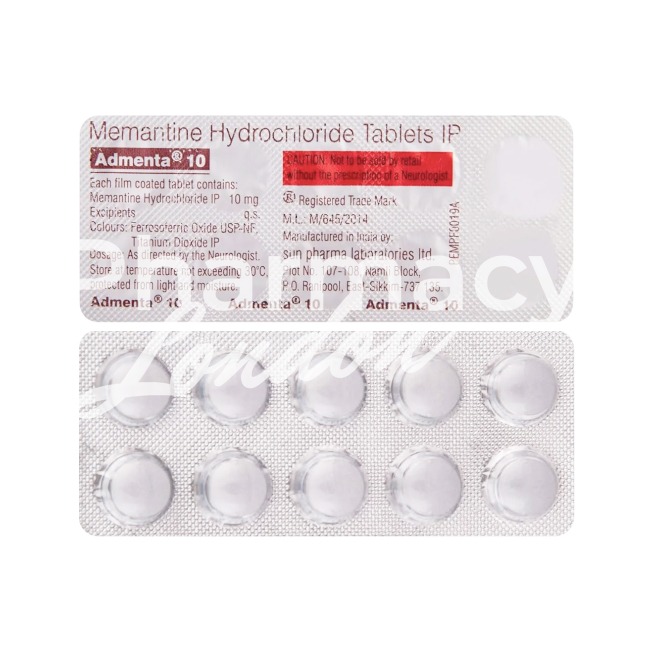
The product on this page is an imported generic, supplied as 10mg tablets in quantities of 30, 60, 90, 120 or 180. British law classes memantine as POM, so it is supplied only against a prescription. The original brand is Ebixa, from Lundbeck, and licensed generic tablets come in 10mg and 20mg strengths from several companies. For people who struggle with tablets, there are oral solutions and orodispersible tablets that melt in the mouth, sold under names such as Valios and Mentino.
The first three weeks and beyond
The dose is increased slowly to help the body adjust. Week one is 5mg a day, week two 10mg, and week three 15mg; from week four onwards the usual dose is 20mg once daily, and that is also the maximum. With 10mg tablets, this means half a tablet, then one, then one and a half, then two. The dose is taken at about the same time each day, with or without food. A carer should be available to make sure doses are taken as planned, and the prescriber will check regularly whether the treatment is still helping.
Kidney and liver function
Kidney function guides the dose. With a creatinine clearance of 50 to 80 ml/min no change is needed. Between 30 and 49 ml/min the daily dose is 10mg, which can be raised to 20mg if it has been well tolerated for at least seven days. From 5 to 29 ml/min the dose stays at 10mg. Mild or moderate liver impairment needs no adjustment, but memantine is not recommended in severe liver disease because no data exist. There are no data in children.
Precautions and interacting medicines
The only contraindication is allergy to memantine or another ingredient. Caution is advised in epilepsy or after previous fits, and in people who have recently had a heart attack, have serious heart failure or have high blood pressure that is not controlled. Anything that makes urine more alkaline, such as a big switch in diet towards vegetarian food, heavy use of antacids, renal tubular acidosis or a severe Proteus urine infection, can raise levels in the blood. Amantadine, ketamine and dextromethorphan should be avoided alongside it. It may strengthen levodopa, dopamine agonists and anticholinergics, weaken barbiturates and antipsychotics, and alter the dose needed of baclofen or dantrolene. Cimetidine, ranitidine, quinidine, quinine and nicotine may raise its levels, and people on warfarin need closer INR monitoring.
Side effects
Common effects include dizziness, headache, sleepiness, constipation, raised blood pressure, shortness of breath, allergic reactions and abnormal liver test results. If dizziness or drowsiness occurs, driving and using machinery should be avoided. Report new symptoms to the GP, and call 999 for a severe reaction. Starting, continuing or stopping memantine is a decision for the specialist or prescriber.



