
Rheumatrex
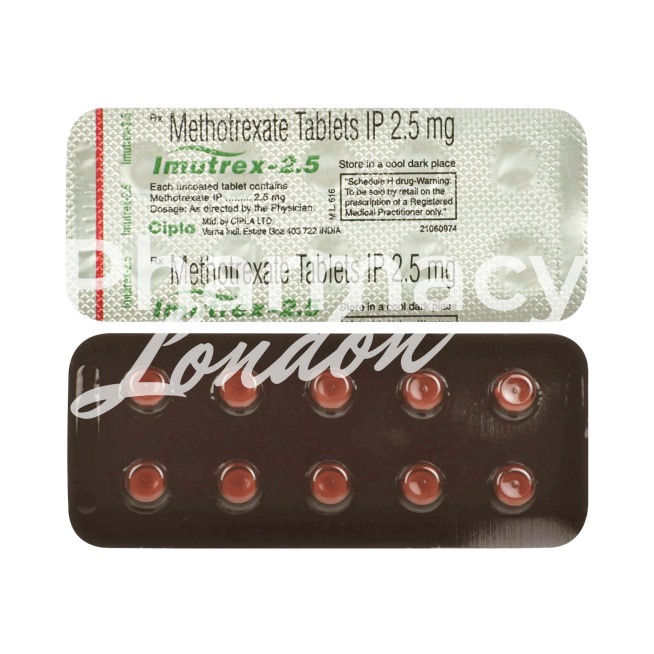
In brief
- Rheumatrex (methotrexate) is a prescription-only medicine in the UK; it should be obtained from a pharmacy only with a valid prescription and appropriate medical monitoring.
- Rheumatrex is used to treat rheumatoid arthritis, severe psoriasis, juvenile idiopathic arthritis and certain cancers; it is an antimetabolite folic acid analogue that inhibits dihydrofolate reductase and other folate-dependent enzymes, reducing DNA synthesis and producing immunosuppressive and antineoplastic effects.
- Usual dosage: for rheumatoid arthritis commonly 7.5–15 mg once weekly (up to 25 mg weekly in some cases); severe psoriasis commonly 10–25 mg once weekly; juvenile idiopathic arthritis ~10–15 mg/m² once weekly; oncology dosing is highly variable and protocol-dependent.
- Forms of administration include oral tablets (2.5–10 mg), oral solution (e.g. 2 mg/ml), subcutaneous or intramuscular injection (pre-filled syringes/auto-injectors 7.5–30 mg) and vials for intravenous or intramuscular use.
- Onset time: for rheumatologic indications many patients begin to notice improvement within 3–6 weeks, with full benefit often taking up to 12 weeks; onset in oncology depends on specific regimen.
- Duration of action: the drug has prolonged intracellular pharmacodynamic effects and is usually dosed once weekly for rheumatologic use; the immunomodulatory effect persists between weekly doses, while clinical duration varies by indication.
- Alcohol warning: avoid or minimise alcohol intake while taking methotrexate because concurrent alcohol increases the risk of hepatotoxicity and other adverse effects.
- The most common side effect is gastrointestinal upset (nausea, vomiting, mouth sores/stomatitis); other frequent adverse effects include mild cytopenias and elevated liver enzymes.
Basic Rheumatrex information
- INN (international nonproprietary name): Methotrexate.
- Brand names available in the United Kingdom: Metoject (pre‑filled syringes/pens), Jylamvo (oral solution) and generic methotrexate tablets.
- ATC code: L01BA01 — Antineoplastic and immunomodulating agents, antimetabolites, folic acid analogues.
- Forms and strengths: tablets 2.5 mg and 10 mg.
- Forms and strengths (continued): oral solution 2 mg/ml (Jylamvo).
- Forms and strengths (continued): pre‑filled syringes and injectors range from 7.5 mg up to 30 mg per device.
- Forms and strengths (continued): vials for injection are supplied at strengths such as 25 mg/ml and 50 mg/2 ml, with larger vials used in oncology settings.
- Manufacturers in the United Kingdom: Teva, Sandoz, Accord, Ebewe and medac (Metoject), among others.
- Registration status in the United Kingdom: Licensed (MHRA); prescription‑only medicine (POM).
- OTC / Rx classification: Prescription‑only (Rx).
- Typical starting dosages by condition: Rheumatoid arthritis usually 7.5–15 mg once weekly (oral or subcutaneous).
- Typical starting dosages by condition (continued): Severe psoriasis often 10–25 mg once weekly.
- Typical starting dosages by condition (continued): Juvenile idiopathic arthritis typically 10–15 mg/m² once weekly (paediatric dosing by body surface area).
- Storage and transport: Store tablets and solutions at 15–25°C, protected from moisture and light.
- Absolute contraindications: Pregnancy and breastfeeding, severe hepatic or renal impairment, alcoholism/chronic liver disease, bone marrow suppression and hypersensitivity to methotrexate or excipients.
- Monitoring: Regular blood monitoring is required during long‑term therapy (CBC, liver function tests and creatinine every 1–3 months is typical).
Legal status and availability in the UK
Methotrexate is a prescription‑only medicine (POM) in the UK and is available on NHS prescription.
In our online pharmacy, Rheumatrex is available without a prescription, with discreet delivery to the United Kingdom in 9‑21 days.
Clinical effectiveness in the UK
Worried that a hospital prescription won’t work the same as trial results?
In NHS practice methotrexate is the backbone DMARD for rheumatoid arthritis and psoriasis care pathways.
Methotrexate provides symptom control and reduces radiographic joint damage when started early.
Improvements in pain and fatigue are usually seen within 3–6 weeks, with better function by 12 weeks.
Adherence issues seen in clinic include mistakes with the once‑weekly schedule, nausea and mouth ulcers, and the burden of frequent blood tests.
Switching from oral tablets to subcutaneous Metoject or equivalent injectables often improves tolerability for those with gastrointestinal side effects.
- Pain VAS reduction: measurable within 3–6 weeks.
- DAS28 improvements: usually apparent by 12 weeks when therapy is optimised.
- Quality of life: stepwise gains reported over the first three months of therapy.
| Timepoint | Expected clinical response |
|---|---|
| 3–6 weeks | Initial symptom relief (pain/fatigue) |
| 12 weeks | Maximal early benefit and improvement in function |
Typical NHS starting dose for RA is 7.5–15 mg once weekly.
Laboratory monitoring commonly follows CBC, LFTs and creatinine every 1–3 months until stable.
Indications and expanded uses (MHRA‑approved and NHS off‑label)
Want to know what conditions methotrexate is used for in the UK?
Licensed uses in the UK include rheumatoid arthritis, severe psoriasis and juvenile idiopathic arthritis, and methotrexate also features in many oncology protocols at much higher doses.
In UK secondary care, specialists sometimes use low‑dose methotrexate off‑label as a steroid‑sparing agent in certain vasculitides, for selected dermatological autoimmune conditions and in carefully controlled management of ectopic pregnancy.
Oncology uses follow separate high‑intensity regimens with different monitoring and dosing schedules.
- Licensed indications: rheumatoid arthritis, severe psoriasis, juvenile idiopathic arthritis, selected oncology uses.
- Common off‑label uses (with specialist oversight): ectopic pregnancy protocols, some dermatological autoimmune diseases, steroid‑sparing in vasculitis.
| Indication | Typical NHS starting dose | Monitoring frequency |
|---|---|---|
| Rheumatoid arthritis | 7.5–15 mg once weekly | CBC, LFTs, creatinine every 1–3 months |
| Severe psoriasis | 10–25 mg once weekly | CBC, LFTs, creatinine every 1–3 months |
| Juvenile idiopathic arthritis | 10–15 mg/m² once weekly | CBC, LFTs, creatinine every 1–3 months |
Composition and brand landscape (active ingredient, UK brands and generics)
Confused about brands and whether tablets are the same as injections?
Active ingredient: Methotrexate (INN).
ATC classification: L01BA01.
UK products include branded injectables such as Metoject (pre‑filled syringes) and multiple generic methotrexate products supplied by manufacturers like Sandoz, Teva, Accord and Ebewe.
Common pharmaceutical forms and dosages in UK practice are tablets (2.5 mg, 10 mg), oral solution (Jylamvo 2 mg/ml), pre‑filled syringes from 7.5–30 mg and vials such as 50 mg/2 ml.
| Form | Example UK brand | Common dosages |
|---|---|---|
| Tablets | Generic methotrexate | 2.5 mg, 10 mg |
| Oral solution | Jylamvo | 2 mg/ml |
| Pre‑filled syringes/injectors | Metoject and generics | 7.5–30 mg |
| Vials | Manufacturer generics | 25 mg/ml; 50 mg/2 ml |
Some patients prefer branded injectors because of the device.
Contraindications and special precautions (high‑risk groups)
Worried about whether methotrexate is safe for you or a family member?
Absolute contraindications include pregnancy and breastfeeding due to teratogenic risk, severe hepatic or renal impairment, alcoholism or chronic liver disease, bone marrow suppression and known hypersensitivity to methotrexate or excipients.
High‑risk groups requiring extra caution include the elderly (reduced renal clearance), people with prior hepatitis B or C, those with diabetes, active infections, peptic ulcer disease and significant comorbidities.
Lifestyle advice includes strict contraception for men and women of childbearing potential, avoidance or marked limitation of alcohol and caution when driving if experiencing dizziness or severe fatigue.
Vaccination guidance: live vaccines are generally contraindicated; inactivated vaccine timing may need adjusting around dosing to optimise response.
- Absolute contraindications: pregnancy, breastfeeding, severe liver or kidney failure, bone marrow suppression, hypersensitivity.
- Relative contraindications: active infection, moderate hepatic/renal impairment, prior viral hepatitis, elderly patients.
Dosage guidelines (NHS‑recommended regimens and adjustments)
Uncertain how often to take Rheumatrex and what to do if you have other health problems?
Standard NHS adult starting regimen for inflammatory conditions is 7.5–15 mg once weekly for rheumatoid arthritis, given orally or subcutaneously.
Severe psoriasis dosing commonly runs 10–25 mg once weekly.
Paediatric dosing for juvenile idiopathic arthritis uses body surface area, typically around 10–15 mg/m² once weekly.
Adjustments: start lower in the elderly or those with renal/hepatic impairment and calculate paediatric doses by body surface area.
Practical safety points: always give methotrexate once weekly, co‑prescribe folic or folinic acid to reduce side effects, and confirm oral and injectable forms are not interchangeable mg:mg without a prescriber review.
| Population/indication | Typical starting dose | Key adjustment note |
|---|---|---|
| Adult RA | 7.5–15 mg once weekly | Consider SC route if GI intolerance |
| Severe psoriasis | 10–25 mg once weekly | Monitor LFTs closely |
| Paediatric JIA | 10–15 mg/m² once weekly | Dose by BSA |
- Counselling checklist: confirm weekly dosing day, explain do not double dose, advise folic acid and arrange regular blood tests.
Interactions overview (drugs and food)
Concerned that your other medicines or holiday plans could cause problems?
Methotrexate has clinically important interactions that can increase toxicity or reduce elimination.
Notable interactions include trimethoprim/sulfamethoxazole and some NSAIDs which may reduce renal clearance, certain antibiotics and aminoglycosides, and reports of delayed elimination with some proton‑pump inhibitors.
Alcohol potentiates hepatotoxicity and should be avoided or limited.
Serious cytopenias and hepatotoxicity are often associated with interacting drugs or dosing errors, underscoring the importance of medication reconciliation at each encounter.
| Drug/food | Clinical effect | Action |
|---|---|---|
| Co‑trimoxazole (trimethoprim/sulfamethoxazole) | Increased risk of bone marrow suppression | Avoid combination or seek specialist advice |
| NSAIDs/high‑dose aspirin | Reduced renal clearance, increased toxicity | Use caution; review dosing and renal function |
| Proton‑pump inhibitors | Delayed methotrexate elimination reported | Monitor clinically; consider alternatives if appropriate |
| Alcohol | Increased hepatotoxicity | Advise marked limitation or abstinence |
Pharmacists play a key role in checking concomitant prescriptions and over‑the‑counter products for interactions at each dispense.
Comparable medicines and preferences (NHS alternatives)
Wondering what happens if methotrexate isn’t suitable?
When methotrexate is unsuitable or insufficient, clinicians consider other conventional synthetic DMARDs such as leflunomide, sulfasalazine and hydroxychloroquine.
For more severe or refractory disease, escalation to biologic agents (for example adalimumab or etanercept) or targeted synthetic DMARDs is common, subject to NHS criteria.
| Alternative | Main pros | Main cons | Monitoring |
|---|---|---|---|
| Leflunomide | Oral option, effective | Hepatic monitoring; requires washout for pregnancy planning | LFTs regularly |
| Sulfasalazine / Hydroxychloroquine | Useful in milder disease or combination | Variable efficacy; different side‑effect profiles | Routine blood tests and monitoring |
| Biologic agents | High efficacy in refractory disease | Infection risk | Screening required (TB, bloods) and ongoing monitoring |
NHS formulary pathways usually prioritise methotrexate for early rheumatoid arthritis because of its proven effectiveness and long‑term data.
Frequently asked questions
Do patients commonly ask the same safety and practical questions?
Q: How often do I take methotrexate?
A: Once weekly; not daily.
Q: Can I drink alcohol while on methotrexate?
A: Alcohol increases liver risk; most clinicians advise minimising intake or abstaining.
Q: Can I get pregnant while taking methotrexate?
A: No — methotrexate is teratogenic; both men and women should use effective contraception and discuss washout periods with their specialist.
Q: What monitoring will I need?
A: Regular blood tests (CBC, LFTs, creatinine) typically every 1–3 months initially, then according to stability and local protocols.
- Red‑flag symptoms requiring urgent review: fever, mouth ulcers, unexplained bruising or bleeding, severe diarrhoea or vomiting.
Guidelines for proper use (UK pharmacist counselling and NHS support)
Not sure what to expect at the pharmacy when collecting Rheumatrex?
Pharmacist counselling should be clear, structured and documented at each dispense.
Confirm the weekly dosing day and dose and emphasise "do not double dose."
Explain the role of folic acid or folinic acid in reducing gastrointestinal and haematological adverse effects.
Review all concomitant medicines and OTC products for interactions and confirm contraception arrangements and pregnancy testing where relevant.
If dispensing pre‑filled syringes such as Metoject, demonstrate the device and give needle‑safety and disposal advice.
- Pharmacy counselling checklist: weekly dosing day, folic acid, side‑effect red flags, monitoring schedule, device training if required.
- Storage: keep between 15–25°C; keep out of reach of children.
Signpost NHS.uk and local rheumatology nurse helplines, and encourage Yellow Card reporting for suspected adverse reactions.
Delivery across the United Kingdom
| City | Region | Delivery Time |
|---|---|---|
| London | England | 9‑14 days |
| Birmingham | England | 9‑14 days |
| Manchester | England | 9‑14 days |
| Glasgow | Scotland | 9‑14 days |
| Leeds | England | 9‑14 days |
| Liverpool | England | 9‑14 days |
| Newcastle Upon Tyne | England | 9‑14 days |
| Sheffield | England | 9‑14 days |
| Bristol | England | 9‑14 days |
| Edinburgh | Scotland | 9‑14 days |
| Leicester | England | 14‑21 days |
| Coventry | England | 14‑21 days |
| Nottingham | England | 14‑21 days |



