
Stalevo
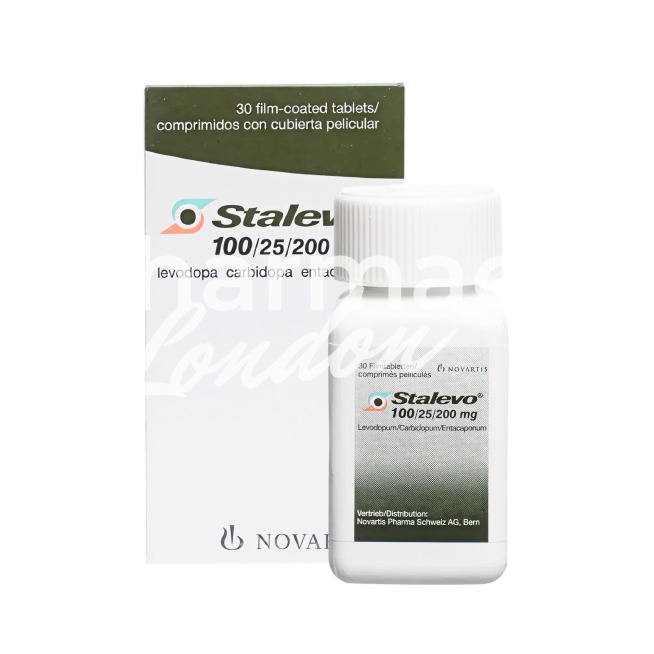
In brief
- Stalevo is a prescription‑only medicine (POM) in the UK.
- Stalevo is used to treat Parkinson’s disease in adults with motor fluctuations ("wearing off"); levodopa is converted to dopamine in the brain, carbidopa (a DDC inhibitor) reduces peripheral levodopa breakdown and side effects, and entacapone (a COMT inhibitor) prolongs levodopa’s action.
- Dosage is individualised and matched to the patient’s current levodopa/DDCI regimen; usual use is one Stalevo tablet per dose 3–7 times daily (tablets contain levodopa 50–200 mg with fixed carbidopa and 200 mg entacapone); do not exceed 200 mg levodopa per dose or about 2,000 mg/day overall.
- Oral administration as film‑coated tablets.
- Effects typically begin within about 20–60 minutes after an oral dose.
- Duration of effect is variable (commonly 3–6 hours for immediate levodopa preparations); entacapone often extends on‑time and may reduce wearing‑off by roughly 1–2 hours per dose in some patients.
- Avoid excessive alcohol — drinking can worsen dizziness, orthostatic hypotension, confusion and other adverse effects; alcohol should be used with caution while taking Stalevo.
- The most common side effect is nausea.
- Would you like to try Stalevo without a prescription?
Legal status and availability in the UK
In our online pharmacy, Stalevo is available without a prescription, with discreet delivery to the United Kingdom in 9–21 days.
Basic Stalevo information
- INN (international nonproprietary name): Levodopa, Carbidopa, Entacapone.
- Brand names available in the United Kingdom: Stalevo — brown, oval film-coated tablets; Rx only.
- ATC code: N04BA03.
- Forms and strengths: Stalevo film-coated tablets (all strengths contain 200 mg entacapone): Stalevo 50 (12.5 mg carbidopa + 50 mg levodopa + 200 mg entacapone); Stalevo 75 (18.75 mg carbidopa + 75 mg levodopa + 200 mg entacapone); Stalevo 100 (25 mg carbidopa + 100 mg levodopa + 200 mg entacapone); Stalevo 125 (31.25 mg carbidopa + 125 mg levodopa + 200 mg entacapone); Stalevo 150 (37.5 mg carbidopa + 150 mg levodopa + 200 mg entacapone); Stalevo 200 (50 mg carbidopa + 200 mg levodopa + 200 mg entacapone).
- Manufacturers: Novartis and Orion Pharma.
- Registration status in the United Kingdom: Prescription only.
- OTC / Rx classification: Prescription-only medicine (Rx).
Clinical effectiveness in the UK
For people with wearing‑off despite levodopa/DDCI alone, a single combination tablet can reduce daily off‑time, improve mobility and reduce the number of tablets taken.
The Stalevo strength is usually matched to the patient's existing levodopa/DDCI dose before careful titration.
Some patients experience increased dyskinesia and transient nausea or diarrhoea during early treatment.
Counselling should cover meal timing, orthostatic fall risk in older patients, and monitoring of mood or behaviour changes.
Outcomes usually monitored include changes in on‑time, UPDRS motor scores and adverse‑event frequency.
Clinicians in NHS movement‑disorder clinics use Stalevo as a practical option when motor fluctuations persist despite optimised levodopa/DDCI therapy.
Indications and expanded uses (MHRA and NHS practice)
Wondering who is suitable for Stalevo under MHRA guidance?
The licensed indication is the treatment of adults with Parkinson’s disease experiencing motor fluctuations (“wearing off”) despite standard levodopa/DDCI therapy.
In both NHS and private neurology practice Stalevo is used to streamline regimens by replacing separate levodopa/DDCI and entacapone tablets with a single fixed‑dose product.
Such streamlining can improve adherence and simplify titration for many patients.
Off‑label pragmatic uses in UK specialist clinics include switching patients intolerant of separate entacapone tablets and selective use in early fluctuators with close monitoring.
Stalevo is not indicated for children under 18 years and safety in that group is unestablished.
- Approved indication: Adults with Parkinson’s disease who have motor fluctuations despite levodopa/DDCI.
- Common pragmatic uses: Regimen simplification, improved adherence, avoiding separate entacapone tablets.
- Not indicated / restricted groups: Children under 18 years; avoid in severe liver disease and phaeochromocytoma (contraindications).
Always cross‑check the current MHRA product information and the SPC before prescribing or switching therapies.
Composition and brand landscape
Have you checked which strengths of Stalevo are available and who supplies them in the UK?
Stalevo is the fixed triple combination of levodopa, carbidopa (co‑careldopa nomenclature) and entacapone under the INN levodopa/carbidopa/entacapone.
Tablets are brown, oval and film‑coated and each strength contains 200 mg entacapone with varying levodopa/carbidopa ratios.
Manufacturers include Novartis and Orion Pharma.
| Strength name | Levodopa (mg) | Carbidopa (mg) | Entacapone (mg) |
|---|---|---|---|
| Stalevo 50 | 50 | 12.5 | 200 |
| Stalevo 75 | 75 | 18.75 | 200 |
| Stalevo 100 | 100 | 25 | 200 |
| Stalevo 125 | 125 | 31.25 | 200 |
| Stalevo 150 | 150 | 37.5 | 200 |
| Stalevo 200 | 200 | 50 | 200 |
Contraindications and special precautions
Worried about who must not take Stalevo or who needs extra monitoring?
Absolute contraindications include known hypersensitivity to any component, narrow‑angle glaucoma, severe liver disease and phaeochromocytoma.
Entacapone can precipitate hypertensive crises in catecholamine‑secreting tumours, so phaeochromocytoma is a strict contraindication.
Relative cautions seen in NHS practice are severe cardiovascular disease, severe renal impairment, and a history of psychosis.
Concurrent use of non‑selective MAO inhibitors is not advised and should be avoided.
Elderly patients often require lower starting doses and close blood‑pressure monitoring for orthostatic hypotension.
Hepatic impairment increases entacapone exposure, so avoiding or reducing dose is recommended.
Practical pharmacy counselling covers driving precautions until response is known, avoiding sudden alcohol excess and advising that urine discolouration may occur and is usually harmless.
- Contraindications: Hypersensitivity to components; narrow‑angle glaucoma; severe liver disease; phaeochromocytoma.
- Special precautions: Cardiac disease, psychiatric history, renal impairment, concurrent MAOIs; caution in the elderly.
Dosage guidelines (NHS‑aligned)
How should Stalevo be started and adjusted in routine NHS care?
Dosing is individualised by matching the current levodopa/DDCI dose to the closest Stalevo tablet strength and then titrating for symptom control.
Typical maintenance dosing is one tablet per dose, three to seven times daily, adjusted to clinical response.
Do not exceed 200 mg levodopa per dose or a total of 2,000 mg/day.
Remember that all Stalevo strengths contain 200 mg entacapone, so cumulative entacapone exposure must be considered when switching from separate entacapone preparations.
Start low and increase cautiously in elderly patients and those with renal or hepatic impairment.
Stalevo is not indicated for patients under 18 years.
Counselling should include timing with meals: protein‑rich meals can blunt levodopa absorption so consistent meal planning is advised.
- Step 1: Confirm current levodopa/DDCI daily dose and dosing frequency.
- Step 2: Select closest Stalevo strength that matches levodopa/carbidopa content.
- Step 3: Start one tablet at planned times and titrate by clinical response; monitor for dyskinesia.
| Typical current regimen | Suggested starting Stalevo | Notes |
|---|---|---|
| 100 mg levodopa + DDCI | Stalevo 100 | One tablet per dose |
| 150 mg levodopa + DDCI | Stalevo 150 | Match levodopa amount |
| 200 mg levodopa + DDCI | Stalevo 200 | Observe maximum per‑dose limit |
Interactions overview (food, drugs, MHRA Yellow Card signals)
Which medicines and foods change how Stalevo works?
Non‑selective MAO inhibitors are contraindicated with Stalevo.
Dopamine antagonists such as some antipsychotics can reduce levodopa efficacy and should be reviewed before starting a COMT inhibitor combination.
Concomitant sympathomimetics and certain antihypertensives require monitoring due to possible cardiovascular effects.
Protein‑rich meals may blunt levodopa absorption; NHS advice is to space doses from large protein meals or keep meal patterns consistent.
Entacapone increases levodopa bioavailability and may boost both therapeutic effect and dyskinesia risk.
Neuropsychiatric events and dyskinesia may occur after switching to a fixed combination.
| Interacting class | Practical pharmacist action |
|---|---|
| Non‑selective MAO Inhibitors | Avoid / contraindicated |
| Antipsychotics (dopamine antagonists) | Review benefit/risk; monitor motor response |
| Iron Supplements | Space dosing (iron can reduce levodopa absorption) |
| Protein‑Rich Meals | Advise consistent meal timing or dose spacing |
Always review the full medication list on e‑prescriptions before dispensing and report suspected adverse reactions via the Yellow Card scheme.
Comparable medicines and NHS prescribing preferences
What are the reasonable alternatives and when might they be preferred?
Alternatives include levodopa/DDCI products such as Sinemet (levodopa/carbidopa) and Madopar (levodopa/benserazide), plus separate entacapone preparations like Comtan.
NHS prescribing weighs efficacy for motor fluctuations, side‑effect profiles and formulary status when choosing between options.
Pros for Stalevo are single‑tablet convenience and predictable entacapone dosing in each tablet.
Cons include reduced flexibility for entacapone titration and a fixed 200 mg entacapone per tablet that may not suit every regimen.
For patients with troublesome dyskinesia, clinicians may prefer lowering levodopa per dose or consider other adjuncts such as MAO‑B inhibitors or dopamine agonists.
- Pros: Simplified dosing; improved adherence; standardised entacapone dose.
- Cons: Less flexibility to titrate entacapone; fixed entacapone content may limit adjustments.
| Product | Main feature | Typical NHS preference |
|---|---|---|
| Sinemet | Levodopa/Carbidopa (no entacapone) | Flexible levodopa dosing; used when entacapone not required |
| Stalevo | Levodopa/Carbidopa/Entacapone fixed | Convenience for fluctuators needing COMT inhibition |
| Madopar | Levodopa/Benserazide | Alternative DDCI in some patients |
FAQ
Q: Will Stalevo stop my “off” periods?
A: Many patients see reduced off‑time and smoother control when their prior levodopa dose is matched to an appropriate Stalevo tablet, but individual response varies and clinician review is needed.
Q: Is urine discolouration dangerous?
A: Brownish urine is a known and usually harmless effect of entacapone, though new dark urine or haematuria should be reported to a clinician.
Q: Can I drive on Stalevo?
A: Do not drive until you know how Stalevo affects you; report dizziness, somnolence or sudden sleep episodes and follow DVLA guidance.
For patient leaflets and condition guidance consult NHS.uk and Parkinson’s UK resources or speak with a local Parkinson’s nurse.
Guidelines for proper use and pharmacist counselling (NHS style)
What should a pharmacist cover when dispensing Stalevo?
Confirm the patient’s current levodopa/DDCI regimen and match to the nearest Stalevo strength before supply.
Explain timing relative to meals and consistent protein intake to avoid fluctuations in levodopa absorption.
Warn about common side effects including dyskinesia, diarrhoea, orthostatic hypotension and urine discolouration.
Advise when to seek urgent care: severe uncontrolled dyskinesia, new psychosis, jaundice or signs of liver failure.
For repeat dispensing, document changes on the NHS App and encourage medicine use reviews and Parkinson’s nurse follow‑up.
Provide a written dosing schedule and clarify electronic prescription and home‑delivery options if used.
Signpost the MHRA Yellow Card for adverse‑event reporting and NHS.uk for official patient advice.
- Counselling flow: Confirm regimen → Match strength → Explain timing & food → Discuss side effects → Provide written plan → Arrange follow‑up.
- Key safety signals: Dyskinesia, diarrhoea, orthostatic hypotension, neuropsychiatric symptoms, urine discolouration.
Delivery across the United Kingdom
| City | Region | Delivery time |
|---|---|---|
| London | England | 9–21 days |
| Birmingham | England | 9–21 days |
| Manchester | England | 9–21 days |
| Glasgow | Scotland | 9–21 days |
| Leeds | England | 9–21 days |
| Liverpool | England | 9–21 days |
| Edinburgh | Scotland | 9–21 days |
| Bristol | England | 9–21 days |
| Sheffield | England | 9–21 days |
| Newcastle | England | 9–21 days |
| Nottingham | England | 9–21 days |
| Belfast | Northern Ireland | 9–21 days |
| Cardiff | Wales | 9–21 days |



