
Telmisartan
In stock
20mg · 40mg · 80mg
from 37,09 £
In brief
- Telmisartan is an angiotensin II receptor blocker that lowers high blood pressure and is also used to cut the risk of heart attack and stroke in higher-risk adults.
- Imported generic tablets in 20, 40 and 80 mg, in packs from 30 up to 360 (80 mg up to 180).
- Prescription-only in the UK and taken once a day, with or without food.
Telmisartan: how it lowers blood pressure
Telmisartan is an angiotensin II receptor blocker (ARB), sometimes called a sartan. It stops angiotensin II, which narrows the arteries, from acting at its AT1 receptor, so the vessel walls relax and pressure inside them drops. Unlike ACE inhibitors, it does not block the enzyme that makes angiotensin II. The effect builds within about three hours of a dose and lasts for a full day. According to the UK SmPC, it is licensed for essential hypertension in adults and for reducing cardiovascular illness in adults who already have atherothrombotic disease, such as coronary heart disease, a previous stroke or peripheral arterial disease, or who have type 2 diabetes with documented organ damage.
Strengths and packs available here
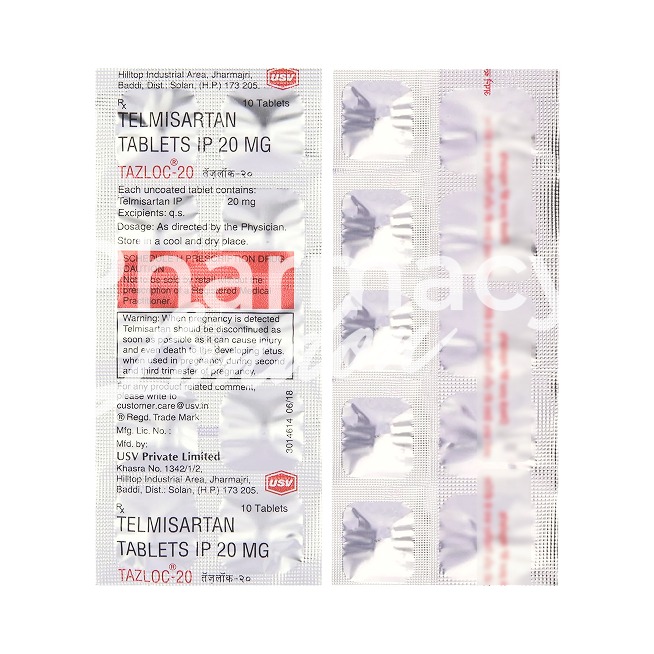
The telmisartan tablets on this page are an imported generic in three strengths. The 20 mg and 40 mg tablets come in packs of 30, 60, 90, 120, 180 or 360, and the 80 mg tablets in packs of 30, 60, 90, 120 or 180. All three strengths are also licensed in the UK. The tablets are sensitive to moisture, which is why the SmPC asks for them to stay sealed in the blister until just before a dose is taken.
Recommended doses
For high blood pressure the usual effective dose is 40 mg once a day, though some people do well on 20 mg. If the target is not reached, the dose can go up to a maximum of 80 mg a day, bearing in mind that the full effect usually takes four to eight weeks to appear; it can also be combined with a thiazide-type diuretic such as hydrochlorothiazide. For cardiovascular prevention the recommended dose is 80 mg once daily. People with severe kidney impairment or on haemodialysis start on 20 mg, and those with mild to moderate liver impairment should not go above 40 mg a day. Tablets are swallowed whole with a drink. There is no need to adjust the dose for older people. The prescriber chooses the dose.
UK licence and brand names
This medicine is prescription-only (POM) in the UK. It is licensed as Micardis 40 mg and 80 mg tablets and as generic telmisartan in 20, 40 and 80 mg strengths; fixed combinations with hydrochlorothiazide are licensed as MicardisPlus. The imported tablets offered here are not a UK-licensed product.
Who should not take it
The SmPC contraindicates it in the second and third trimesters of pregnancy, in biliary obstruction, in severe liver impairment, and alongside aliskiren in people with diabetes or reduced kidney function (GFR below 60 mL/min/1.73 m²). Anyone planning a pregnancy should be moved to another treatment, and it should be stopped as soon as a pregnancy is confirmed. Dehydration from high-dose diuretics, vomiting or diarrhoea can cause a marked fall in blood pressure after the first dose. Its safety and effectiveness in children and young people under 18 have not been established.
Telmisartan with other medicines, and possible side effects
Like other drugs acting on the renin-angiotensin system, it can raise blood potassium, especially with potassium supplements, potassium-containing salt substitutes, potassium-sparing diuretics, ACE inhibitors, heparin or ciclosporin, so potassium and creatinine are monitored in people with kidney problems. It can increase digoxin and lithium levels, and anti-inflammatory painkillers may blunt its effect and strain the kidneys. Uncommon side effects include dizziness, low blood pressure, back pain, muscle cramps and urinary or upper respiratory infections. Angioedema, meaning swelling of the face, lips, tongue or throat, is rare but needs emergency care. Keeping blood tests and blood pressure checks up to date helps the prescriber judge whether the dose is still right.



