
Ursodeoxycholic acid
In stock
300mg
from 94,23 £
In brief
- Ursodeoxycholic acid is a bile acid that lowers the cholesterol content of bile and is used for certain liver and gallbladder conditions.
- Listed as 300mg tablets in quantities of 30, 60, 90, 120 or 180.
- It is licensed in the UK as a prescription-only medicine, with the dose calculated from body weight.
Ursodeoxycholic acid and its licensed uses
Ursodeoxycholic acid, often called UDCA, occurs naturally in small quantities in human bile. Given as a medicine, it reduces the amount of cholesterol the liver releases into bile, so that bile becomes less likely to form stones and may gradually dissolve existing cholesterol stones. The UK SmPC for the 300mg film-coated tablet covers primary biliary cholangitis (previously called primary biliary cirrhosis), a long-term condition in which the small bile ducts inside the liver are slowly damaged, and the dissolving of small to medium-sized cholesterol gallstones that do not show on X-ray, provided the gallbladder still works. Stones made of calcium or pigment do not respond. In children aged 6 to 17 it is also licensed for liver and bile problems caused by cystic fibrosis.
The 300mg tablet and quantities on offer
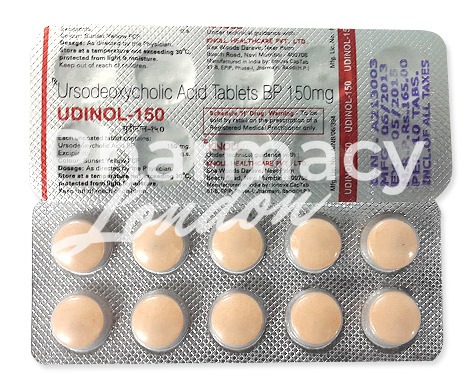
Ursodeoxycholic acid is listed in a single strength, the 300mg tablet, available as 30, 60, 90, 120 or 180 tablets. The quantity chosen affects only how long a supply lasts; the daily amount is worked out by the prescriber. The product here is an imported generic.
Working out the daily dose
The amount taken is calculated per kilogram of the patient's weight. In primary biliary cholangitis, adults take 10 to 15mg for each kilogram of body weight per day, divided into two to four doses. To dissolve gallstones, the usual range is 6 to 12mg per kilogram daily, given as one dose at bedtime or split through the day; in people who are obese it may go up to 15mg per kilogram. A gallstone course may take as long as two years, and the tablets are kept going for a further three months once imaging shows no remaining stones. Each dose goes down with a glass of water. Liver blood tests are repeated regularly during treatment, and ultrasound or X-ray of the gallbladder shows whether the stones are shrinking.
Brands and forms licensed in the UK
Ursodeoxycholic acid is available in Britain only on prescription, as a POM. The electronic medicines compendium lists tablets of 150mg, 300mg and 450mg, 250mg capsules and oral suspensions, as well as branded products including Ursofalk, Cholurso and Deoxxa. Generic packs simply carry the name of the active substance.
Situations where it is not suitable
The SmPC rules it out for gallstones that are calcified and visible on X-ray, for acute inflammation of the gallbladder or bile ducts, a blocked bile duct, frequent bouts of biliary colic, or a gallbladder that does not empty properly. The 300mg tablet's SmPC also excludes pregnancy, breastfeeding, women who may become pregnant, chronic liver disease, peptic ulcers and inflammatory bowel conditions, as well as allergy to bile acids.
Other medicines, unwanted effects and the final say
Charcoal, colestyramine, colestipol and antacids containing aluminium hydroxide or smectite can bind the drug in the gut and should be taken at least two hours apart. Ursodeoxycholic acid can increase the absorption of ciclosporin, so levels may need checking. Oestrogens, combined hormonal contraceptives and clofibrate can encourage new stones. Soft, pasty stools or diarrhoea are common. Very rarely, people with advanced primary biliary cholangitis experience severe pain under the right ribs or a worsening of liver function. Your doctor or prescriber decides whether this treatment is right for you.



