
Verapamil HCl
In stock
40mg · 120mg
from 14,83 £
In brief
- Verapamil HCl is a calcium channel blocker that slows the heart and relaxes blood vessels.
- Two strengths: 40 mg in packs from 60 up to 270 tablets, and 120 mg in packs from 30 up to 270.
- The tablets are an imported generic; verapamil is a prescription-only medicine in the UK.
What Verapamil HCl does in the body
Verapamil HCl, the hydrochloride salt of verapamil, reduces how much calcium can flow into the cells of the heart and of the arterial wall. The result is a slower, steadier heartbeat, slower conduction through the AV node and wider blood vessels. Under the UK SmPC for standard-release oral verapamil it is used for mild to moderate high blood pressure, for treating and preventing chronic stable, vasospastic and unstable angina, and for treating and preventing paroxysmal supraventricular tachycardia. It also reduces the ventricular rate in atrial flutter and fibrillation.
Tablet counts for each strength
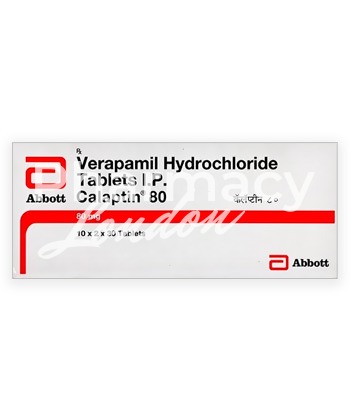
The 40 mg tablets can be ordered as 60, 90, 120 or 270 tablets. For the 120 mg tablets the choice is 30, 60, 90, 120 or 270. Whichever strength you pick, the tablets are made outside the UK and imported as a generic, so check the pack to confirm whether they are standard or slow-release.
Verapamil HCl and its UK licence
In Britain, verapamil is supplied on prescription; the UK oral solution, for instance, is classed as a POM. The UK range includes an oral solution, an injection and several modified-release tablets, sold under names such as Securon SR, Half Securon SR, Vera-Til SR, Verapress MR and Vertab SR. Modified-release products release the drug slowly and are dosed differently from standard tablets, so the two should not be swapped tablet for tablet. The imported generic offered here has no UK marketing authorisation of its own.
How doses are usually set
In adults with hypertension, the SmPC starts at 120 mg twice a day, increased to 160 mg twice a day if needed; up to 480 mg daily in divided doses has been used. Angina is generally treated with 120 mg three times daily, although 80 mg three times daily can be enough for some people whose angina comes on with exertion. Episodes of supraventricular tachycardia are managed with anything from 40 mg to 120 mg, three times daily, matched to how severe they are. Liver disease calls for a lower dose and careful titration, and kidney impairment needs close monitoring. Older adults take the usual adult dose unless liver or kidney function is reduced.
Conditions and combinations that rule it out
The SmPC lists cardiogenic shock, a heart attack complicated by a slow pulse, very low blood pressure or left ventricular failure, second- or third-degree heart block and sick sinus syndrome (unless a pacemaker is fitted), sino-atrial block, uncompensated heart failure, a pulse below 50 beats a minute and a systolic pressure under 90 mmHg. Atrial flutter or fibrillation with an accessory pathway such as Wolff-Parkinson-White syndrome, porphyria, combination with ivabradine or intravenous dantrolene, and drinking grapefruit juice are also contraindications. Intravenous beta-blockers must not be given during treatment. Verapamil can raise blood levels of digoxin, ciclosporin, tacrolimus, carbamazepine and some statins, including simvastatin and atorvastatin, and it can increase the bleeding risk with dabigatran. It may also raise blood alcohol levels, whereas St John's Wort may lower verapamil levels.
Effects people may notice on Verapamil HCl
The SmPC describes it as generally well tolerated, with side effects that tend to be mild and short-lived; constipation may occur. Swollen ankles, low blood pressure and, now and then, flushing are also described, while headache or dizziness are reported only rarely. At higher doses, or in people with existing heart damage, the pulse may become too slow, heart block can develop and heart failure may start or worsen. Fainting, breathlessness or a very slow pulse needs prompt medical attention.
Leaving the decision to the prescriber
Whether Verapamil HCl suits your heart condition, and at which dose, is for your doctor or prescriber to judge.



