
Xenical
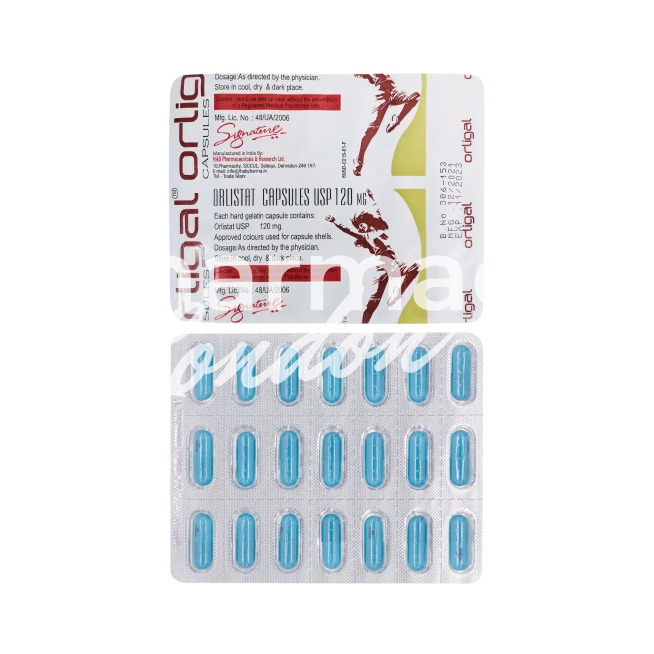
In brief
- Xenical (orlistat 120 mg) is a prescription-only medicine in the UK, whereas the lower-strength 60 mg version (alli) is available from pharmacies without a prescription.
- Xenical (orlistat) is used for weight loss and weight management in adults with overweight or obesity. It works as a lipase inhibitor, blocking the absorption of part of the fat from food in the intestine.
- The usual dose of Xenical is 120 mg taken three times daily with each main meal containing fat, or up to 1 hour after the meal. It should be used together with a reduced-calorie, low-fat diet.
- The form of administration is an oral capsule.
- Xenical starts working from the first dose by reducing fat absorption during the meal, but noticeable weight-loss results usually take several weeks and should be assessed after about 12 weeks.
- The duration of action covers the fat in the meal taken with each dose, so it is used three times daily. Treatment may be continued long term if effective and well tolerated.
- Alcohol does not have a specific direct interaction with Xenical, but heavy drinking can undermine weight-loss efforts and may worsen gastrointestinal discomfort, so moderation is advisable.
- The most common side effects are oily or fatty stools, oily spotting, increased defecation, urgent bowel movements, flatulence with discharge, and abdominal cramping.
- Would you like to try Xenical without a prescription?
Legal status and availability in the UK
In our online pharmacy, Xenical is available without a prescription, with discreet delivery to the United Kingdom in 9–21 days.
How Xenical works and why it is used in NHS-style weight management
- What it is
- Xenical is the brand name for orlistat, an anti-obesity medicine classified as ATC A08AB01.
- How it works
- It inhibits gastrointestinal lipases, which reduces the absorption of fat from food.
- How it is used
- It is an adjunct to diet, not a standalone solution for weight loss.
- Standard regimen
- 120 mg with each main meal containing fat, taken during or up to 1 hour after eating.
People often ask whether Xenical suppresses appetite in the way some other weight loss medicines do.
It does not.
Its job is simpler: block some dietary fat from being absorbed, so the medicine only makes sense when the meal plan is adjusted at the same time.
That is why UK clinicians usually consider it when lifestyle measures alone have not been enough, and when a medicine still needs to fit into primary care weight support.
In an NHS-style pathway, the practical focus is on gradual change, diet review, and follow-up rather than expecting a single capsule to do all the work.
UK regulatory position for Xenical and alli
What is the legal and supply picture in the UK?
Xenical 120 mg is a prescription-only medicine (POM) in the UK and is supplied on NHS or private prescription.
Alli is the lower-strength 60 mg version available from pharmacies without a prescription, while Xenical remains the main prescription brand.
Xenical formulations, brand names and generics in the UK
Is Xenical always the same medicine, even when the box looks different?
Yes.
The active ingredient is orlistat, and the packaging may vary by supplier, but the medicine itself remains the same.
Xenical is the Roche brand, while generic orlistat capsules contain the same active ingredient.
Patients sometimes recognise the brand name first, then later switch to a generic listing that says orlistat 120 mg capsules.
| Brand / formulation | Strength | Typical supply route | Notes |
|---|---|---|---|
| Xenical | 120 mg | Prescription | Branded product by Roche |
| Orlistat generic | 120 mg | Prescription | Active ingredient matches Xenical |
| Alli | 60 mg | Pharmacy medicine (P) | Lower-strength option |
The standard prescribed strength is 120 mg, while 60 mg alli is the lower-strength pharmacy option.
Pack sizes vary by supplier.
Who Xenical is for: indications, eligibility and when it is not suitable
Who tends to be offered Xenical in real practice?
The main indication is weight management in adults alongside a reduced-calorie diet.
Review is expected after 12 weeks, and treatment should be discontinued if less than 5% of body weight has been lost.
Clinicians in the UK usually look at BMI, previous attempts at weight loss, other health conditions, and whether the person is realistically ready to change eating habits.
- Adults needing structured weight management support.
- People who can follow a reduced-calorie, lower-fat diet.
- Patients who can attend follow-up and respond to a 12-week review.
- Those who understand that the medicine works best with diet change.
| Group | Typical position |
|---|---|
| Suitable | Adult patient with weight management needs and willingness to change diet. |
| Not suitable | Child under 12 years, or anyone with contraindications to orlistat. |
| Needs specialist advice | Complex multimorbidity, interaction risk, renal concerns, or uncertain diagnosis. |
Off-label use is limited and should not be presented as routine NHS practice.
Contraindications and higher-risk patients
What should be checked before anyone starts Xenical?
The product data are clear about the absolute contraindications, and they matter in everyday pharmacy screening.
| Absolute contraindications | Relative cautions |
|---|---|
| Chronic malabsorption syndromes | Kidney stones |
| Hypersensitivity to orlistat or excipients | Chronic kidney disease |
| Pregnancy | Gallbladder or pancreatic disorders |
| Breastfeeding | Ciclosporin and warfarin use |
For UK patients with multimorbidity, that means a GP or pharmacist review is sensible before treatment starts.
Medication reconciliation matters, especially where warfarin, ciclosporin, or renal disease is already part of the clinical picture.
Weight loss is contraindicated in pregnancy, and breastfeeding is not recommended with orlistat.
People with a history of kidney stones or chronic kidney disease need extra caution because of the renal warning and oxalate nephropathy concern.
Dosing, missed doses and duration of treatment
How is Xenical actually taken day to day?
- Take 120 mg orally three times daily.
- Use it with each main meal containing fat.
- Take it during the meal or up to 1 hour after eating.
- Do not exceed the standard dose, because higher doses do not improve efficacy.
- Missed dose
- If the meal was within the last hour, take the dose.
- Late missed dose
- If more than 1 hour has passed, skip it and do not double up.
- Treatment review
- Check response at 12 weeks and stop if weight loss is less than 5% of body weight.
Long-term use is possible, and the study data in the product information extend to 2 to 4 years.
Children do not have an established dosing recommendation under 12 years, and elderly patients usually do not need adjustment, although caution is sensible because of comorbidity and polypharmacy.
Side effects, food interactions and practical management
The side effects are usually the part people worry about most.
That concern is understandable, especially if someone has heard stories about embarrassing bowel symptoms.
The common effects are gastrointestinal and tend to be linked to how much fat is in the meal.
| Mild effects | Moderate effects |
|---|---|
| Oily or fatty stools | Faecal urgency |
| Oily spotting | Increased defecation |
| Fatty or oily evacuation | Flatulence with discharge |
| Increased defecation | Abdominal cramping, rectal pain, nausea |
GI side effects often peak early, then decrease when the low-fat diet is followed more closely.
That is why practical counselling matters so much.
A takeaway with hidden fat, an indulgent Friday night meal, or a habit of adding cheese and creamy sauces can all make tolerability worse.
Most patients do best when they learn to spot these “fat traps” and keep meals consistent rather than swinging from very low fat to very high fat.
There is no special alcohol restriction in the product data, but medicines should still be checked with a pharmacist.
Interactions, monitoring and Yellow Card reporting
Which medicine combinations need the most care?
| Medicine | Concern | Monitoring action |
|---|---|---|
| Ciclosporin | Interaction risk | Review levels and timing with the prescriber. |
| Warfarin | Interaction risk and INR change | Check INR and coordinate with the anticoagulation team. |
| Fat-soluble vitamins | Reduced intake may matter in selected patients | Clinicians may advise supplementation where appropriate. |
In UK practice, the safest approach is a GP or pharmacist review if the person already takes long-term treatment for complex disease.
Any suspected adverse effect can be reported through the MHRA Yellow Card scheme.
- Check the medicine list carefully.
- Ask about warfarin or ciclosporin specifically.
- Monitor INR if relevant.
- Report suspected adverse effects through Yellow Card.
Xenical compared with alternatives and when patients prefer each option
How does Xenical compare with the other names people ask about?
| Medicine | Mechanism | Route | Why some patients choose it |
|---|---|---|---|
| Xenical | Lipase inhibitor | Oral | Non-systemic action and familiar weight-management pathway. |
| Alli 60 mg | Lipase inhibitor | Oral | Lower-strength option available from pharmacies. |
| Saxenda | GLP-1 analogue | Injectable | Preferred by some people seeking stronger efficacy. |
| Wegovy / Ozempic | GLP-1 analogue | Injectable | Chosen by patients comfortable with injections. |
| Mysimba | CNS appetite suppressant | Tablet | Oral option with a different mechanism. |
Some patients prefer an oral tablet or capsule because it feels easier to fit into daily life.
Others would rather use an injectable if the expected weight-loss effect matters more to them than convenience.
Xenical’s main advantage is that it acts locally in the gut, while its main limitation is GI tolerability and the need to keep fat intake down.
Patient counselling and FAQs
What do people usually want to know before they start?
Often it is not the science first.
It is whether the capsules are awkward to take, whether the side effects are embarrassing, and whether the medicine can fit around work, family meals, or a weekend takeaway.
That is where a pharmacist conversation helps, and it is also why NHS 111 or NHS patient portals can be useful for practical self-management questions.
- Take with fat-containing meals
- This means the capsule should be taken with each main meal that contains fat, during the meal or up to 1 hour afterwards.
- Review at 12 weeks
- This is the point at which the treatment is checked for whether it is worth continuing.
- How long does Xenical take to work? Some people notice change early, but the formal review is at 12 weeks.
- What if a dose is missed? Take it if the meal was within the last hour; otherwise skip it.
- Does it need to be taken with every meal? It is taken with each main meal containing fat.
Clear, non-judgemental advice usually makes the biggest difference, especially for people who feel embarrassed about stomach and bowel effects.
Delivery across the United Kingdom
| City | Region | Delivery time |
|---|---|---|
| London | England | 9–21 days |
| Birmingham | England | 9–21 days |
| Manchester | England | 9–21 days |
| Leeds | England | 9–21 days |
| Liverpool | England | 9–21 days |
| Sheffield | England | 9–21 days |
| Bristol | England | 9–21 days |
| Newcastle upon Tyne | England | 9–21 days |
| Nottingham | England | 9–21 days |
| Southampton | England | 9–21 days |
| Cardiff | Wales | 9–21 days |
| Glasgow | Scotland | 9–21 days |
| Edinburgh | Scotland | 9–21 days |
| Belfast | Northern Ireland | 9–21 days |



