
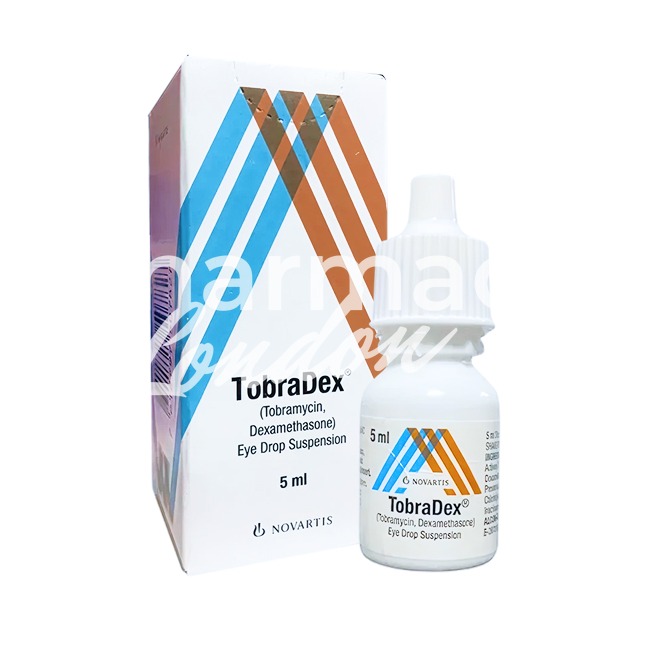
Tobradex
In stock
0.1/0.3%
from 20,03 £
In brief
- Tobradex is an eye-drop suspension pairing the antibiotic tobramycin (0.3%) with the corticosteroid dexamethasone (0.1%).
- Listed in the 0.1/0.3% strength as one bottle or as packs of two, three, four or five bottles.
- In the UK it is a prescription-only medicine used around cataract surgery in adults and in children from the age of two.
What Tobradex eye drops contain and why they are used
Tobradex is a combination eye drop: each millilitre of the suspension holds 3 mg of tobramycin, an aminoglycoside antibiotic, and 1 mg of dexamethasone, a corticosteroid. The antibiotic guards against bacterial infection, while the steroid dampens the redness, swelling and discomfort that follow an operation. The UK SmPC licenses it for one purpose only: the prevention and treatment of inflammation, and the prevention of infection, associated with cataract surgery in adults and children aged two and over.
Strength and number of bottles
The product on this page is labelled 0.1/0.3%, that is, 0.1% dexamethasone and 0.3% tobramycin. Tobradex is supplied here as an imported product and can be ordered as a single bottle or in packs of two, three, four or five bottles. Because the liquid is a suspension, the bottle needs a good shake each time, and it should be kept tightly closed between uses.
How the drops are used after an operation
According to the SmPC, adults put a single drop in the operated eye at intervals of four to six hours during waking hours, and this can be stepped up to a drop every two hours over the first day or two. A standard course runs for a fortnight, with 24 days as the absolute limit. As healing progresses the drops are spaced out step by step; ending the course too soon is discouraged. Shake the bottle well, keep the dropper tip away from the eye and lashes, then close the eye gently and press on the inner corner for about a minute to limit absorption into the body. If more than one eye medicine is prescribed, allow a five-minute gap between them, with any ointment going in after the drops. The eye surgeon or prescriber decides how long the course should run. Tobradex is licensed only for use around cataract surgery, not for other eye complaints.
UK licence and legal category
Under UK rules this tobramycin and dexamethasone combination may only be supplied on prescription (POM). Its SmPC is published on the electronic medicines compendium under the names Tobrasone/Tobradex Eye Drops. The bottles listed here come from imported stock rather than UK-licensed packs.
When it should not be used
These drops must not be used in herpes simplex keratitis, in chickenpox, vaccinia or other viral infections of the cornea or conjunctiva, in mycobacterial or fungal eye infections, in untreated parasitic infections or untreated pus-forming infections of the eye, or in anyone allergic to either ingredient. Longer courses of a steroid can raise the pressure inside the eye, leading to glaucoma, and can cause cataract, so eye pressure should be checked regularly, especially in children. Taking ritonavir or cobicistat at the same time increases the risk of steroid effects on the whole body, such as Cushing's syndrome or adrenal suppression. Steroid eye drops can also slow the healing of the cornea, and long use of an antibiotic may allow resistant organisms or fungi to take hold, so the course should not be extended without advice.
Side effects and practical points with Tobradex
The effects reported most often, though in fewer than one in a hundred people, are eye pain, raised eye pressure, burning or stinging on application, and itching. Blurred vision can occur briefly after each drop, so wait until it clears before driving or using machinery. Tobradex can occasionally cause allergic reactions, with swelling or redness of the eyelids; if that happens, stop using it and seek advice. Any lasting change in vision should be checked by an eye specialist. The preservative benzalkonium chloride can irritate the eye and discolour soft contact lenses; lenses are generally not worn while the eye is inflamed.



