Cyclopam
In brief
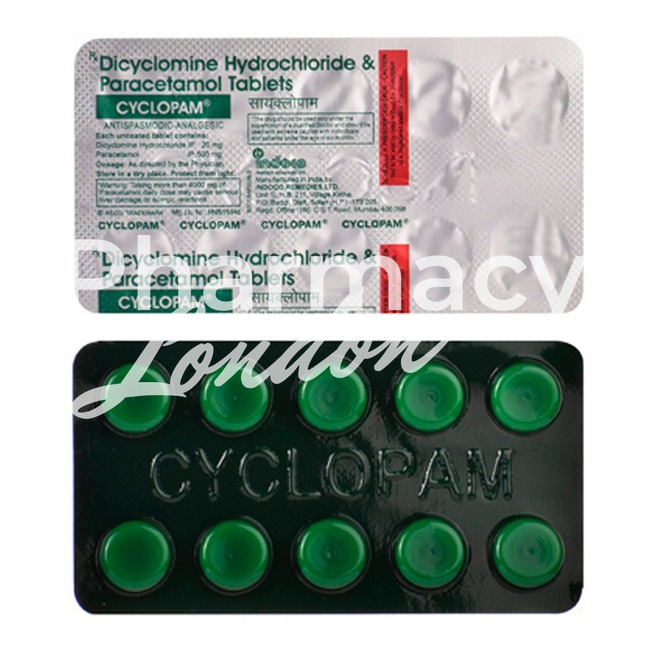
- Cyclopam contains dicycloverine hydrochloride 20 mg plus paracetamol 500 mg in each tablet; choose packs of 30, 60, 90 or 120 tablets.
- Its manufacturer-labelled uses cover abdominal cramps and colicky pain, IBS-type spasm and period pain, with treatment decided and supervised by a doctor.
- The combination is made in India and is not licensed in the UK; each ingredient is available separately in the UK.
- Paracetamol from every source must stay within the adult maximum of 4 g per 24 hours; never add another paracetamol-containing medicine.
- Overdose can cause delayed liver damage: obtain urgent medical help straight away, even if you feel well.
- Tell the doctor about glaucoma, urinary retention, myasthenia gravis or gastrointestinal obstruction; the product is not for infants.
- Sleepiness and blurred vision prevent safe driving; anticholinergic effects can reduce sweating and increase heat risk.
- Delivery time depends on the shipping method and is shown at checkout.
Cyclopam
Understanding Cyclopam: Basic Product Information
- INN: dicycloverine hydrochloride + paracetamol. Dicycloverine is also known as dicyclomine.
- Form, route and strength: oral tablets; 20 mg dicycloverine hydrochloride and 500 mg paracetamol per tablet.
- Offer: packs containing 30, 60, 90 or 120 tablets.
- Category: gastrointestinal tract and pain relief.
- Country of manufacture: this combination is made in India.
- Licensing information: this combination is not licensed in the UK; dicycloverine and paracetamol are each available in the UK as separate medicines.
- Treatment responsibility: selection and supervision by a doctor.
The Place of Cyclopam in Treating Cramps
Cyclopam brings together a gastrointestinal antispasmodic and an analgesic. Manufacturer labelling describes use for abdominal cramps, colicky pain, IBS-type spasm and period pain. Whether this combination is appropriate depends on a doctor's assessment of the particular symptoms and the patient's health.
The purpose of Cyclopam is symptom management where suitable, rather than diagnosis or correction of every underlying cause. An IBS-type description does not confirm IBS. A new pain pattern, unexplained symptoms or frequent recurrence should prompt medical review.
What Each Cyclopam Tablet Contributes
The dicycloverine hydrochloride component acts against smooth muscle spasm in the gut and has anticholinergic properties. Paracetamol contributes pain relief. Because the proportions in Cyclopam are fixed, the ingredients cannot be adjusted independently by changing the number of tablets.
Comparing Cyclopam With Separate Medicines
| Medicine at substance level | Contribution to treatment |
|---|---|
| Paracetamol alone | An analgesic without dicycloverine's antispasmodic component. Excess intake can damage the liver. |
| Dicycloverine hydrochloride alone | A gastrointestinal antispasmodic without paracetamol. Anticholinergic precautions still apply. |
| Dicycloverine hydrochloride with paracetamol | Cyclopam combines the two roles at 20 mg/500 mg per tablet, carrying the precautions of both ingredients. |
Substitution is a clinical decision. A doctor considers the cause of pain and the need for each ingredient before choosing Cyclopam or a separate medicine.
Agreeing a Cyclopam Dose With Your Doctor
Follow the plan given for the supplied combination, including the interval between doses and the end of the course. For information only, the UK SmPC for separate dicycloverine tablets lists 10–20 mg three times daily for adults and children over 12. This range is not a Cyclopam regimen and does not establish that these combination tablets are appropriate for children. Dicycloverine UK product information.
- Take the prescribed Cyclopam tablets by mouth with water.
- Leave the dose and interval unchanged unless the doctor revises them.
- Do not take a double amount following a missed dose; obtain advice about resuming if needed.
- Report continuing, changing or repeatedly returning symptoms rather than extending treatment yourself.
Avoiding Paracetamol Harm With Cyclopam
Read the active ingredients of every remedy you use. Cyclopam must not be combined with another paracetamol-containing product, including combination painkillers and cold or flu treatments. The adult maximum from all sources is 4 g paracetamol within 24 hours.
This maximum is not permission to take enough Cyclopam to reach it: the accompanying dicycloverine dose must also be respected. Discuss low body weight, inadequate nutrition, liver illness and regular heavy drinking, as a lower paracetamol limit may be needed. Kidney impairment also requires medical consideration before use. NHS guidance on paracetamol.
Emergency Advice After Excess Cyclopam
Paracetamol overdose can lead to serious liver damage that is delayed. Get urgent medical help immediately after taking too much Cyclopam, or if an overdose is suspected, even if you feel well. Do not wait for symptoms to develop. Bring the medicine packaging and a record of other products taken. Official paracetamol overdose advice.
When Cyclopam May Be Unsuitable
A doctor must check glaucoma, difficulty emptying the bladder or urinary retention, an enlarged prostate, myasthenia gravis and gastrointestinal obstruction before Cyclopam is considered. Anticholinergic effects may worsen these conditions, and treatment may be unsuitable.
Also disclose severe ulcerative colitis, troublesome reflux, heart disease, a fast heartbeat and any kidney or liver disorder. Never take Cyclopam after an allergy to either active ingredient or another component; consult the supplied leaflet for the excipients. Older patients can be particularly sensitive to adverse effects such as confusion.
Cyclopam and Other Products You Take
A pharmacist should check all prescribed treatments, non-prescription remedies and supplements before they are used alongside Cyclopam. Sedating antihistamines, certain antidepressants and medicines with anticholinergic effects may add to adverse reactions.
Specifically mention warfarin, medicines for epilepsy, metoclopramide, domperidone and flucloxacillin. Interactions can concern bleeding risk, liver safety, the movement of the digestive tract or acid balance. Paracetamol with flucloxacillin can cause serious metabolic acidosis, particularly with severe kidney impairment, sepsis, malnutrition or chronic heavy alcohol use. Seek urgent medical help for deep, rapid breathing, severe drowsiness or vomiting. The list here is not exhaustive, so provide the names of all products rather than checking only painkillers.
Recognising Cyclopam Side Effects
- A dry mouth, constipation or nausea may occur.
- Some people develop dizziness, drowsiness or blurred vision.
- Consult the prescriber about effects that are troublesome or do not settle.
- Palpitations, confusion or difficulty urinating need prompt assessment; inability to pass urine calls for urgent medical help.
Using Cyclopam Around Heat and Traffic
Anticholinergic activity can reduce sweating, which increases the chance of overheating. Avoid excessive heat and strenuous exercise in hot conditions. If overheating is accompanied by fever, marked weakness or confusion, stop Cyclopam and seek urgent help. Dizziness, sleepiness or blurred sight means no driving, cycling or machinery; alcohol can make impairment worse. Dicycloverine patient precautions.
Cyclopam in Pregnancy and Early Life
Tell your doctor if you are pregnant or trying for a baby. Cyclopam requires an individual assessment during pregnancy; the suitability of paracetamol on its own cannot be applied automatically to the combination. Avoid Cyclopam while breastfeeding because of the dicycloverine ingredient.
These tablets are not for infants or for treating a baby's colic. Dicycloverine is contraindicated under six months, with serious reactions reported in infants. Do not adapt the fixed-dose combination using instructions for children's preparations of either ingredient.
Urgent Warning Signs During Cyclopam Treatment
Abdominal pain needs urgent medical help if it is sudden or severe, occurs with fever or collapse, or is associated with blood in vomit or stools or black stools. A distended abdomen with vomiting or inability to pass wind or stool can signal obstruction. Pain or bleeding with a possible pregnancy also needs urgent assessment. Further Cyclopam must not be used to conceal these signs.
Stop Cyclopam and obtain urgent care for a blistering rash or a painful, red eye with sudden visual disturbance. Facial or throat swelling and difficulty breathing can indicate a serious allergic reaction. Call 999 for breathing problems or collapse.
Storage and Disposal of Cyclopam
Use the temperature guidance printed on your Cyclopam pack. Retain the original packaging, protect it from moisture and excessive heat, and keep it out of children's reach. Check expiry dates before use and return unwanted or expired medicine to a pharmacy.
Answers to Common Cyclopam Queries
Is Cyclopam the same as plain paracetamol?
No. Alongside 500 mg paracetamol, every Cyclopam tablet contains 20 mg dicycloverine hydrochloride. Both the anticholinergic precautions and paracetamol safety limits therefore matter.
Can Cyclopam be used for menstrual cramps?
Period pain is included among the manufacturer-labelled uses. Your doctor decides whether this is suitable after reviewing the symptoms and your medical history.
How much Cyclopam is in each available pack?
Packs hold 30, 60, 90 or 120 tablets, all at 20 mg/500 mg. The quantity purchased does not set the treatment schedule or course length.
Why get help after excess Cyclopam if I feel normal?
Early wellbeing does not rule out delayed liver injury from paracetamol. Suspected overdose always needs urgent medical help, without waiting for symptoms.